



Delay in reverse

Thread Starter
AudiWorld Junior Member
Joined: Nov 2021
Posts: 6
Likes: 0
 Delay in reverse
I have audi A4 2011 with automatic transmition, can anyone tell me why when i put in reverse it delays 1 or 2 seconds and than go in reverse or if u put the brake and release the brake still go in reverse 2 seconds late. Anyone any advice ?

AudiWorld Super User


Joined: Dec 2001
Posts: 13,939
Likes: 3,356
From: Georgia
But which automatic? The FWD Multitronic CVT, the FWD or quattro S-tronic 7-speed DSG, or the quattro Tiptronic 8-speed ZF?
For the ZF8, going neutral to reverse closes the D clutch. Maybe there's an engagement issue with the D clutch on yours.
It's any different shifting from D to R, vs. from P to R, vs. from N to R?
The D clutch is also closed in 4th-8th. If you're having shift delay from 3rd to 4th also, that might point more to the D clutch. But if 3>4 is seemless, then maybe it's not D clutch.
Pull DTCs and see if anything is there.
For the ZF8, going neutral to reverse closes the D clutch. Maybe there's an engagement issue with the D clutch on yours.
It's any different shifting from D to R, vs. from P to R, vs. from N to R?
The D clutch is also closed in 4th-8th. If you're having shift delay from 3rd to 4th also, that might point more to the D clutch. But if 3>4 is seemless, then maybe it's not D clutch.
Pull DTCs and see if anything is there.
Thread Starter
AudiWorld Junior Member
Joined: Nov 2021
Posts: 6
Likes: 0
But which automatic? The FWD Multitronic CVT, the FWD or quattro S-tronic 7-speed DSG, or the quattro Tiptronic 8-speed ZF?
For the ZF8, going neutral to reverse closes the D clutch. Maybe there's an engagement issue with the D clutch on yours.
It's any different shifting from D to R, vs. from P to R, vs. from N to R?
The D clutch is also closed in 4th-8th. If you're having shift delay from 3rd to 4th also, that might point more to the D clutch. But if 3>4 is seemless, then maybe it's not D clutch.
Pull DTCs and see if anything is there.
For the ZF8, going neutral to reverse closes the D clutch. Maybe there's an engagement issue with the D clutch on yours.
It's any different shifting from D to R, vs. from P to R, vs. from N to R?
The D clutch is also closed in 4th-8th. If you're having shift delay from 3rd to 4th also, that might point more to the D clutch. But if 3>4 is seemless, then maybe it's not D clutch.
Pull DTCs and see if anything is there.
AudiWorld Super User
Joined: Dec 2001
Posts: 13,939
Likes: 3,356
From: Georgia
I don't know anything about the failure modes of the CVT. There is a specific reverse gear clutch, as well as "The rotational direction for reverse is changed by means of a planetary gear train."
So maybe something up with that reverse clutch. But you're likely going to need find someone or a shop familiar with the 0AW CVT to really diagnose and repair it. Or, being only reverse, just let it be.
Force path when reversing
The lined plates of the reverse clutch are connected to the ring gear and the steel plates are connected to the gearbox housing. When the reverse clutch becomes positively engaged, it holds the ring gear and thereby prevents the gearbox housing from rotating on starting. Torque is then transmitted to the planet carrier, which begins to rotate in the opposite direction to the engine. The vehicle reverses. When reversing, road speed is limited electronically. The variator remains in the starting torque ratio.
The lined plates of the reverse clutch are connected to the ring gear and the steel plates are connected to the gearbox housing. When the reverse clutch becomes positively engaged, it holds the ring gear and thereby prevents the gearbox housing from rotating on starting. Torque is then transmitted to the planet carrier, which begins to rotate in the opposite direction to the engine. The vehicle reverses. When reversing, road speed is limited electronically. The variator remains in the starting torque ratio.

AudiWorld Newcomer
Joined: Nov 2023
Posts: 1
Likes: 0
Hi. Can you please tell me if you solved it? I just bought Audi with the same problem.
Trending Topics

AudiWorld Super User


Joined: Oct 2006
Posts: 2,436
Likes: 96
From: In my Garage
AudiWorld Stories
Bringing Audi to Life for Audi Fans
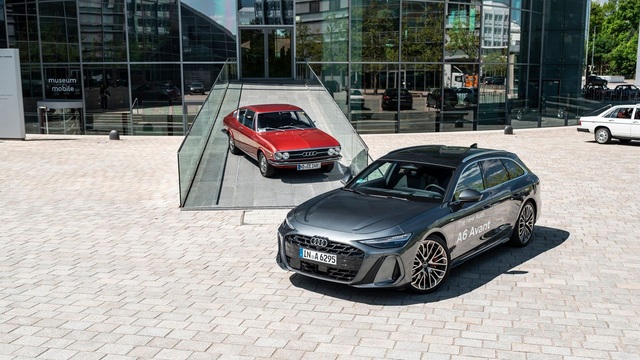
The Highs & Lows of Every Audi C-Class Generation
Joe Kucinski
Top 10 Most Expensive Audis Ever Sold on Bring-A-Trailer
Brett Foote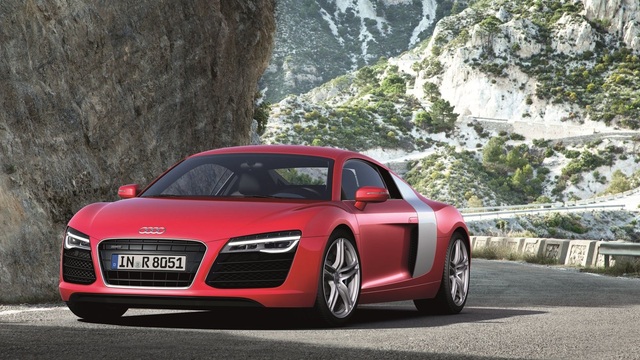
10 Audi Features & Options We Miss the Most!
Joe Kucinski
Audi Recreates Crazy-Looking Speed Record Breaker From 1935
Verdad Gallardo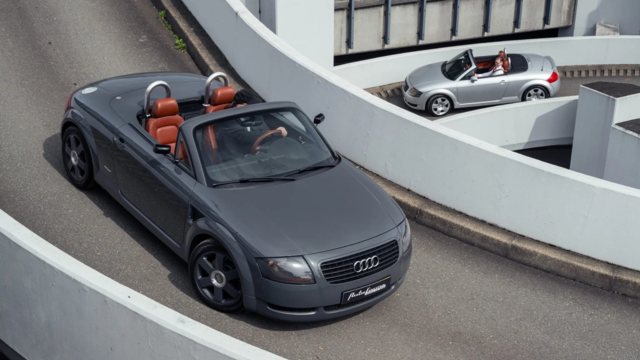
Coachbuilder Recreates the 1995 Audi TTS Concept
Verdad Gallardo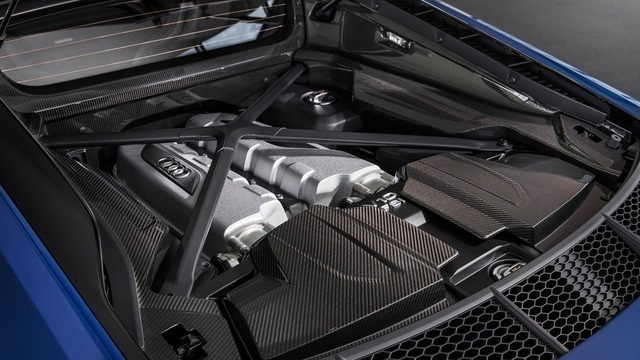
Every Audi V10 Car Ranked!
Joe Kucinski
9 Audi Designs That Aged Like Fine Wine
Verdad Gallardo
2026 Audi Q5 Buyer's Guide (Every Model Explained)
Brett Foote
Ranking Every Current Audi 'S' Model From Worst to First!
Joe Kucinski
Thread
Thread Starter
Forum
Replies
Last Post
goldfishhh
Chicago Discussion
19
Jan 31, 2007 06:41 PM
watty
A4 (B5 Platform) Discussion
0
Mar 17, 2003 06:28 AM
Philip W
A4 (B5 Platform) Discussion
4
Aug 29, 2001 05:42 PM