




Audi all wheel drive vs. BMW's

Thread Starter
AudiWorld Member
Joined: Mar 2001
Posts: 286
Likes: 0
 Audi all wheel drive vs. BMW's
Anybody know the exact difference between Audi's quattro system and the system in the BMW 535ix?
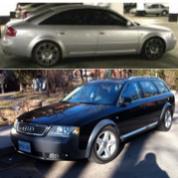
Am on my second A6 2.7T (5th Audi altogether) and drove the Bimmer yesterday and was very impressed as one would expect with 300HP and 300 lbs./ft torque. Great suspension. Interior not as nice as Audi's-no surprise there. Wondered how the Bimmer's all wheel drive might perform in the snow and ice compared to Audi's.
Thanks!
Am on my second A6 2.7T (5th Audi altogether) and drove the Bimmer yesterday and was very impressed as one would expect with 300HP and 300 lbs./ft torque. Great suspension. Interior not as nice as Audi's-no surprise there. Wondered how the Bimmer's all wheel drive might perform in the snow and ice compared to Audi's.
Thanks!

AudiWorld Super User
Joined: Aug 2003
Posts: 5,844
Likes: 0
i've driven both through some nasty stuff-- both are nice systems
IIRC, the early stage of x-drive was just an AWD system and had no power-shifting capabilities. The modern x-drive system does have the ability to shift power to individual wheels like quattro. However, I'm not sure if x-drive has locking differential. At the end of the day, they'll both take you where you need to go. If they can't get you there you probably shouldn't be going anyways ;-)
As for the handling advantages on dry roads, well the BMW wins there no matter what the drive system.
I like driving the X5 when it gets real nasty just because of the hill decent control... but now it is history :-(
As for the handling advantages on dry roads, well the BMW wins there no matter what the drive system.
I like driving the X5 when it gets real nasty just because of the hill decent control... but now it is history :-(

New Member
Joined: Dec 2006
Posts: 151
Likes: 0
Audi's all wheel Drive uses friction to sense where torque is needed, BMW uses wheel sensors to ...
detect variances in wheel speed. They then send the power to the wheels that are moving the slowest. Audi's system works much fast and what could be considered pro-actively, while as BMW's, MB's, etc. all use the latter method which is retro-active. If pushing the car hard, the Audi will come out ahead every time, because the BMW waits to lose traction before power gets shifted, Audi always sends the power to the wheel with the most traction (friction) before slippage is caused. The Audi will only lose traction when there is nothing available and ALL the wheel Forward or Aft are tractionless.
NOW, Audi is also working on producing a few new AWD systems that will blow people away. This is going to use new clutch systems in the differentials and allow a much broader power distribution, including cross car distribution where power can be sent instantly from left rear to right front and vice versa allowing the first AWD system with absolutely infinitely variable power distribution amonst the 4 wheels.
NOW, Audi is also working on producing a few new AWD systems that will blow people away. This is going to use new clutch systems in the differentials and allow a much broader power distribution, including cross car distribution where power can be sent instantly from left rear to right front and vice versa allowing the first AWD system with absolutely infinitely variable power distribution amonst the 4 wheels.
Trending Topics
AudiWorld Stories
Bringing Audi to Life for Audi Fans

10 Strangest Audi Designs That Actually Made Production
Joe Kucinski
2027 Audi Q7 and SQ7: Audi Upgraded EVERYTHING!
Michael S. Palmer
Audi Unveils Absurdly Cool New Supercar: 10 Things You Need to Know!
Verdad Gallardo
The Highs & Lows of Every Audi C-Class Generation
Joe Kucinski
Top 10 Most Expensive Audis Ever Sold on Bring-A-Trailer
Brett Foote
10 Audi Features & Options We Miss the Most!
Joe Kucinski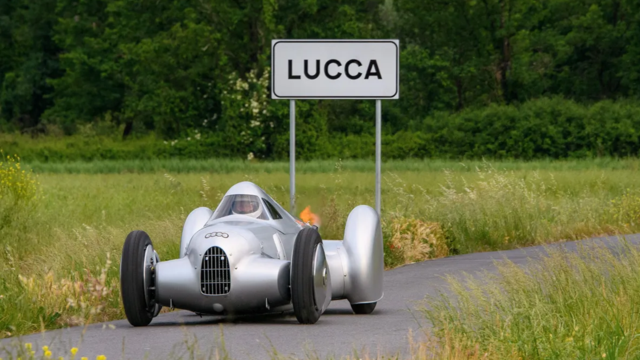
Audi Recreates Crazy-Looking Speed Record Breaker From 1935
Verdad Gallardo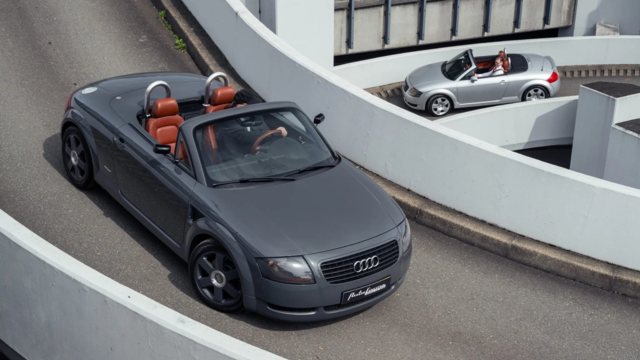
Coachbuilder Recreates the 1995 Audi TTS Concept
Verdad Gallardo
Every Audi V10 Car Ranked!
Joe Kucinski
AudiWorld Uber User
Joined: Mar 2000
Posts: 52,895
Likes: 1
Why would Audi bother? They appear to be going with Torque Vectoring
BMW uses one system that is shared among BMW cars and SUVs. To package awd with the long inline 6 engines, they use a chain driven (in the SUVs) or gear driven (in later model cars) power take-off at the multi-clutch plate transfer case to send power to the front wheels. The front axles go through the sump in some applications, which means suspension travel is limited, as well as opportunity to lower the car. As pioneered by Audi, they use ABS sensors working in reverse to detect wheelspin and slow the spinning wheel, thus faking the open differential at either end of the car into sending power to wheels that actually do have grip.
<img src="http://bmwfinlandpinter01.ergointegration.no/bilde.asp?id=3428">
<img src="http://china5.nikkeibp.co.jp/china/image2005/01/050105bmw3.jpg">
In a Torsen based Audi the center differential is a fully mechanical unit most often used in rally cars and military vehicles. No electronics involved. Since the engine sits ahead of the front axle, the power take-off shaft and drive shafts are not in conflict with any other portions of the driveline. The latest version of Quattro in the B8 chassis of the A5, show that the engine sits further back than ever, with the transfer system even more compactly packaged.
<img src="http://www.mecanicavirtual.org/images-diferencial/audi-torsen-grande.jpg">
Approx 68% of power is sent to the rear wheels of a xDrive equipped vehicle, and the remainder to the front. This gives a more rwd type of dynamic. Good when plenty of grip is available, but prone to initial oversteer in really nasty weather. It takes a few fractions of a second for power to be routed from slipping wheels to gripping wheels. By starting with a 50/50 power distribution, there is inherently less dynamic instability in a traditional Quattro system, as there is usually less power shuffle.
The reason behind most manufacturers adoption of E-diffs is lower production costs by using existing parts rather than create new ones. It also lowers cost of maintenance since only brake pads see extra wear, not hard to replace limited slip clutches. Finally it is easy to integrate into ESP systems, and change the handling characteristics via programming rather than hardware changes.<ul><li><a href="http://www.gizmag.com/go/6575/">The new Quattro?</a></li></ul>
<img src="http://bmwfinlandpinter01.ergointegration.no/bilde.asp?id=3428">
<img src="http://china5.nikkeibp.co.jp/china/image2005/01/050105bmw3.jpg">
In a Torsen based Audi the center differential is a fully mechanical unit most often used in rally cars and military vehicles. No electronics involved. Since the engine sits ahead of the front axle, the power take-off shaft and drive shafts are not in conflict with any other portions of the driveline. The latest version of Quattro in the B8 chassis of the A5, show that the engine sits further back than ever, with the transfer system even more compactly packaged.
<img src="http://www.mecanicavirtual.org/images-diferencial/audi-torsen-grande.jpg">
Approx 68% of power is sent to the rear wheels of a xDrive equipped vehicle, and the remainder to the front. This gives a more rwd type of dynamic. Good when plenty of grip is available, but prone to initial oversteer in really nasty weather. It takes a few fractions of a second for power to be routed from slipping wheels to gripping wheels. By starting with a 50/50 power distribution, there is inherently less dynamic instability in a traditional Quattro system, as there is usually less power shuffle.
The reason behind most manufacturers adoption of E-diffs is lower production costs by using existing parts rather than create new ones. It also lowers cost of maintenance since only brake pads see extra wear, not hard to replace limited slip clutches. Finally it is easy to integrate into ESP systems, and change the handling characteristics via programming rather than hardware changes.<ul><li><a href="http://www.gizmag.com/go/6575/">The new Quattro?</a></li></ul>