

i've decided to trade in my TT....(long)

Thread Starter
AudiWorld Super User
Joined: Mar 2003
Posts: 11,103
Likes: 2
From: Brooklyn NYC
 i've decided to trade in my TT....(long)
When I was little, I watched quite a lot of cartoons. I remember that there was a cartoon about fantasy car racing. The cars in the cartoon always behave like this: under hard acceleration, the front wheels get off the ground and the car leans backward; under hard braking, the rear wheels get off the ground and the car leans forward. I always wonder why the cartoon is drawn this way because I never saw any real car running like this on the road. (Well, later I see them on some drag race video tape...)
Now I am a grown-up with a car. I had all kinds of experience regarding hard acceleration and hard braking. I realize that the cartoons, while exaggerated, do have basis on the reality. When I accelerate my car fanatically, I feel like I was pulled to the back of the seat. When I brake my car desperately, if not for the constraint of the seat belt, I think I've already hit the driving wheel.
Why cars behave like this? After some research, I discovered that it is all due to magic of rotational mechanics.
Rotating about the Center of Gravity
The weight of a car is supported by the four wheels. Depending on the weight distribution of a car, each wheel share part of the load. From Newton's Third Law, we know that there is a reaction force acting on the tires from the ground. This is illustrated by the following picture:
When the car is at rest:
LrWr = LfWf
We know that:
Wf + Wr = mg
So the load on each wheel is:
Wf = mgLr / (Lf + Lr)
Wr = mgLf / (Lf + Lr)
When a car accelerates, there is a force acting on the road from the driving wheel. This force is acting to where the car is going.
Now in addition to the load of the car, we also have the acceleration force. From the picture, we learn that the load on the rear wheel is acting clockwisely around the center of gravity whereas the load on the front wheel and the acceleration force is acting counter-clockwisely around the center of gravity.
The laws of physics dictate that if those rotational forces do not balance out each other, the car will rotate about its center of gravity. When we accelerate a car, we apply forces on the ground. To prevent rotation, the weights on the tires change to maintain the following equality:
LrWr* = LfWf*+hFr+hFf
By using the fact that Wf* + Wr* = mg:
Wf* = (mgLr - hFf - hFr) / (Lf + Lr)
Wr* = (mgLf + hFf + hFr) / (Lf + Lr)
This result underscores why weight distribution changes during acceleration. Doing similar math with the acceleration forces acting in the opposite direction, you can get a picture of weight transfer during braking. Okay, now it is time to use our TT for an example. How about running it at the peak torque in the first gear?
Skyline is a front engine four wheel drive car, so there is a weight bias on the front. Its weight distribution is 57:43. That means with a total weight of 1550kg×9.8ms-2 = 15190N, Wf is 8658.3N and Wr is 6531.7N. According to the equality: LrWr = LfWf and the wheelbase L (Lr+Lf) of the car is 2.665m, we can deduce that:
WfLf + WrLf = WrLr + WrLf
mgLf = WrL
This effectively tells us Lf is the weight percentage on the rear times the wheelbase, ie 0.43×2.665 = 1.146m. The corresponding Lr is 1.519m.
As for h, we assume the center of gravity happens at 25% of the height of the car. This is somewhat reasonable as the top half of the car is mostly empty space. Given the car height is 1.36m, h is 0.34m.
Skyline attains peak torque at 4400rpm. This corresponds to running at 11.092ms-1. At this point, the engine produces 392Nm of torque that should reach the four tires for a total of 16283.38N in force. At the speed of 11.092ms-1, the air resistance is 65.5N. As a result, we can deduce the new weight distribution as:
1550×9.8×1.519 - 0.34×(16283.38-65.5)
Wf* = ------------------------------------------------------
2.665
= 6588.94N
1550×9.8×1.146 + 0.34×(16283.38-65.5)
Wr* = ------------------------------------------------------
2.665
= 8601.06N
From the result we can see that there are about 2000N being transferred from the front tires to the rear tires. This is quite a significant change. According to the Road Resistance page, changes in the weight distribution change the static resistance on the tires and hence affect the handling of the car.
What about the cars in cartoons?
How come the cars in cartoons lift up the front during acceleration? According to our math, this won't happen unless mgLr < h(Ff + Fr). This makes the load on the front tire goes to negative. Since the front tires are now up in the air, Ff can't be transferred to the ground and thus no longer has effect. To keep the front tires up, the engine now needs to apply a torque to the rear tires such that mgLr < hFr. If our engine continues to generate this much of torque to the rear tires, there will be net torque running in the clockwise direction that can rollover the car unless you lift off the gas pedal (you can brake as well but for cars that only has brakes for the front wheels, This is not useful.).
For our example, the condition for the initial lift off (ie the lift off that occurs when both wheels are still on the ground) is Ff+Fr > 23073.61N. Our Skyline is a four-wheel drive car. Let's assume it gives 50% of its torque to the front tires and 50% of the torque to the rear tires. So now, what should the peak torque become when it can do the initial lift-off?
?(?)Ggk 1 mgLr
-------------- ? --- cd?Av2 = ---------
r 2 h
r(mgLr / h + 0.5cd?Av2)
? = --------------------------------------
Ggk
0.3266×(1550×9.8×1.519 / 0.34 + 65.5)
? = ----------------------------------------------
3.545×3.827
? = 1635.30Nm
For the second lift off (ie, the lift off after the front wheels no longer apply force to the ground), since only 50% of the torque goes to the rear tires, the torque needs to double, this gives us 3270.60Nm at 4400rpm.
<img src="http://www.best-horror-movies.com/images/April-Fools-day-movie-poster.jpg">
Now I am a grown-up with a car. I had all kinds of experience regarding hard acceleration and hard braking. I realize that the cartoons, while exaggerated, do have basis on the reality. When I accelerate my car fanatically, I feel like I was pulled to the back of the seat. When I brake my car desperately, if not for the constraint of the seat belt, I think I've already hit the driving wheel.
Why cars behave like this? After some research, I discovered that it is all due to magic of rotational mechanics.
Rotating about the Center of Gravity
The weight of a car is supported by the four wheels. Depending on the weight distribution of a car, each wheel share part of the load. From Newton's Third Law, we know that there is a reaction force acting on the tires from the ground. This is illustrated by the following picture:
When the car is at rest:
LrWr = LfWf
We know that:
Wf + Wr = mg
So the load on each wheel is:
Wf = mgLr / (Lf + Lr)
Wr = mgLf / (Lf + Lr)
When a car accelerates, there is a force acting on the road from the driving wheel. This force is acting to where the car is going.
Now in addition to the load of the car, we also have the acceleration force. From the picture, we learn that the load on the rear wheel is acting clockwisely around the center of gravity whereas the load on the front wheel and the acceleration force is acting counter-clockwisely around the center of gravity.
The laws of physics dictate that if those rotational forces do not balance out each other, the car will rotate about its center of gravity. When we accelerate a car, we apply forces on the ground. To prevent rotation, the weights on the tires change to maintain the following equality:
LrWr* = LfWf*+hFr+hFf
By using the fact that Wf* + Wr* = mg:
Wf* = (mgLr - hFf - hFr) / (Lf + Lr)
Wr* = (mgLf + hFf + hFr) / (Lf + Lr)
This result underscores why weight distribution changes during acceleration. Doing similar math with the acceleration forces acting in the opposite direction, you can get a picture of weight transfer during braking. Okay, now it is time to use our TT for an example. How about running it at the peak torque in the first gear?
Skyline is a front engine four wheel drive car, so there is a weight bias on the front. Its weight distribution is 57:43. That means with a total weight of 1550kg×9.8ms-2 = 15190N, Wf is 8658.3N and Wr is 6531.7N. According to the equality: LrWr = LfWf and the wheelbase L (Lr+Lf) of the car is 2.665m, we can deduce that:
WfLf + WrLf = WrLr + WrLf
mgLf = WrL
This effectively tells us Lf is the weight percentage on the rear times the wheelbase, ie 0.43×2.665 = 1.146m. The corresponding Lr is 1.519m.
As for h, we assume the center of gravity happens at 25% of the height of the car. This is somewhat reasonable as the top half of the car is mostly empty space. Given the car height is 1.36m, h is 0.34m.
Skyline attains peak torque at 4400rpm. This corresponds to running at 11.092ms-1. At this point, the engine produces 392Nm of torque that should reach the four tires for a total of 16283.38N in force. At the speed of 11.092ms-1, the air resistance is 65.5N. As a result, we can deduce the new weight distribution as:
1550×9.8×1.519 - 0.34×(16283.38-65.5)
Wf* = ------------------------------------------------------
2.665
= 6588.94N
1550×9.8×1.146 + 0.34×(16283.38-65.5)
Wr* = ------------------------------------------------------
2.665
= 8601.06N
From the result we can see that there are about 2000N being transferred from the front tires to the rear tires. This is quite a significant change. According to the Road Resistance page, changes in the weight distribution change the static resistance on the tires and hence affect the handling of the car.
What about the cars in cartoons?
How come the cars in cartoons lift up the front during acceleration? According to our math, this won't happen unless mgLr < h(Ff + Fr). This makes the load on the front tire goes to negative. Since the front tires are now up in the air, Ff can't be transferred to the ground and thus no longer has effect. To keep the front tires up, the engine now needs to apply a torque to the rear tires such that mgLr < hFr. If our engine continues to generate this much of torque to the rear tires, there will be net torque running in the clockwise direction that can rollover the car unless you lift off the gas pedal (you can brake as well but for cars that only has brakes for the front wheels, This is not useful.).
For our example, the condition for the initial lift off (ie the lift off that occurs when both wheels are still on the ground) is Ff+Fr > 23073.61N. Our Skyline is a four-wheel drive car. Let's assume it gives 50% of its torque to the front tires and 50% of the torque to the rear tires. So now, what should the peak torque become when it can do the initial lift-off?
?(?)Ggk 1 mgLr
-------------- ? --- cd?Av2 = ---------
r 2 h
r(mgLr / h + 0.5cd?Av2)
? = --------------------------------------
Ggk
0.3266×(1550×9.8×1.519 / 0.34 + 65.5)
? = ----------------------------------------------
3.545×3.827
? = 1635.30Nm
For the second lift off (ie, the lift off after the front wheels no longer apply force to the ground), since only 50% of the torque goes to the rear tires, the torque needs to double, this gives us 3270.60Nm at 4400rpm.
<img src="http://www.best-horror-movies.com/images/April-Fools-day-movie-poster.jpg">
Trending Topics
AudiWorld Stories
Bringing Audi to Life for Audi Fans

10 Strangest Audi Designs That Actually Made Production
Joe Kucinski
2027 Audi Q7 and SQ7: Audi Upgraded EVERYTHING!
Michael S. Palmer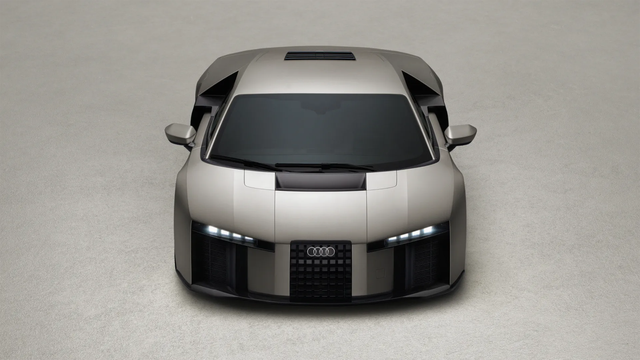
Audi Unveils Absurdly Cool New Supercar: 10 Things You Need to Know!
Verdad Gallardo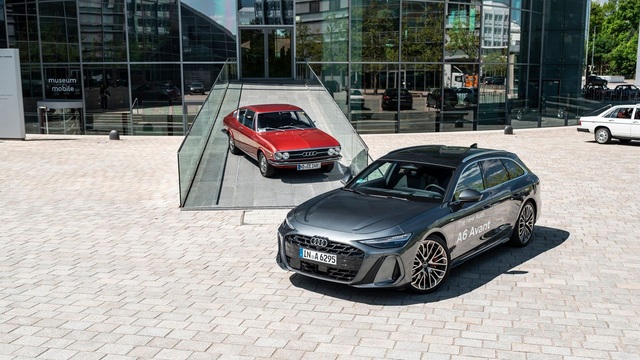
The Highs & Lows of Every Audi C-Class Generation
Joe Kucinski
Top 10 Most Expensive Audis Ever Sold on Bring-A-Trailer
Brett Foote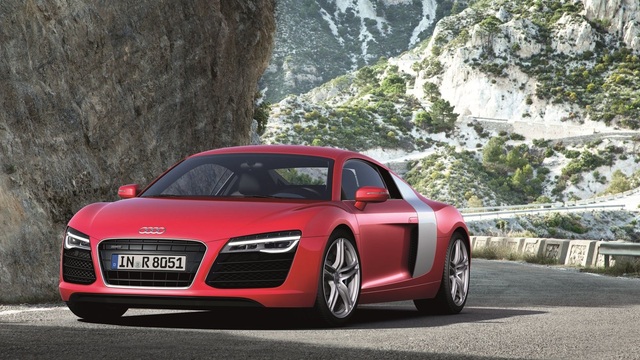
10 Audi Features & Options We Miss the Most!
Joe Kucinski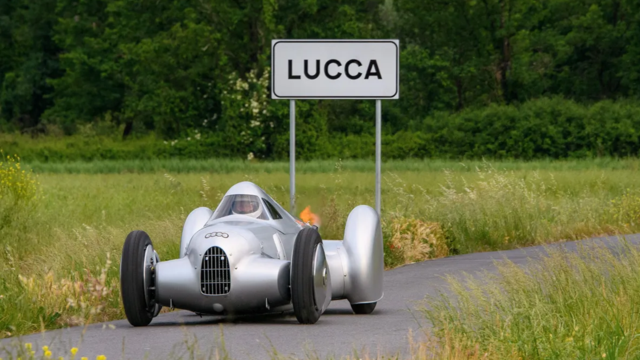
Audi Recreates Crazy-Looking Speed Record Breaker From 1935
Verdad Gallardo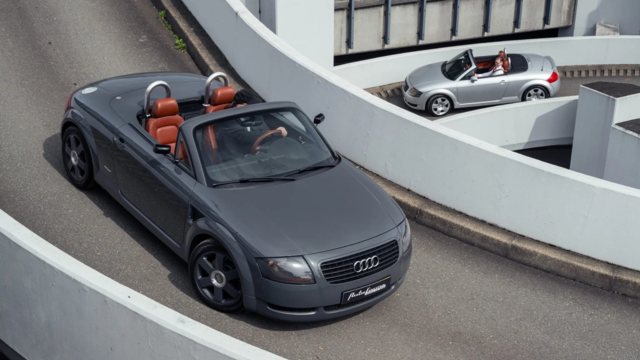
Coachbuilder Recreates the 1995 Audi TTS Concept
Verdad Gallardo