




Suspension issue

AudiWorld Super User


Joined: Jan 2021
Posts: 4,568
Likes: 1,456
From: USA - NM

Air suspension not being calibrated, or an air leak on one side, etc.
On steel susp, if a strut gets replaced with a 'quick strut' that includes a new spring, often it will sit higher due to the new spring, etc. There could be other possibilities also, but as you give nothing in details about your car, that's all my time you get.
On steel susp, if a strut gets replaced with a 'quick strut' that includes a new spring, often it will sit higher due to the new spring, etc. There could be other possibilities also, but as you give nothing in details about your car, that's all my time you get.

Thread Starter
AudiWorld Newcomer
Joined: Feb 2025
Posts: 2
Likes: 0
Air suspension not being calibrated, or an air leak on one side, etc.
On steel susp, if a strut gets replaced with a 'quick strut' that includes a new spring, often it will sit higher due to the new spring, etc. There could be other possibilities also, but as you give nothing in details about your car, that's all my time you get.
On steel susp, if a strut gets replaced with a 'quick strut' that includes a new spring, often it will sit higher due to the new spring, etc. There could be other possibilities also, but as you give nothing in details about your car, that's all my time you get.
AudiWorld Super User
Joined: Jan 2021
Posts: 4,568
Likes: 1,456
From: USA - NM
2007 Audi Q7 have calibrated but the suspension is always 2 cm higher on the left than it is on the right also have done a recent error scan and two errors show up. One is for compressor overheating due to cut off and the other one is pressure over duty deactivation due to exceeded limit
The fact that you say you did the level calibration, which is the procedure that levels the car out evenly if you measured and saved the values correctly (it took 3 attempts to be able to save the new measurements on our Q7 w/air susp, btw). It's still unclear whether you are saying the car is dropping in height at all when it sits for any period of time, or if it maintains height perfectly overnight, but the left side is just slighly higher than the right side at all times...the car is not dropping at any corner based on actual measurements taken/verified.

AudiWorld Member
Joined: Dec 2024
Posts: 208
Likes: 69
If you have VCDS, you can test them. Set the suspension to lift. Go the the output tests on the suspension page and instruct the suspension to lower one corner at a time. The correctly functioning corners will exhibit a solenoid click and hissing of air being released. On the corner with the blocked valve, you’ll hear the click but no hissing. The absence of a click would indicate a faulty solenoid.
AudiWorld Super User
Joined: Jan 2021
Posts: 4,568
Likes: 1,456
From: USA - NM
This is a common symptom of a blocked residual pressure valve. Each air spring has a valve which is designed to snap shut in the event of a sudden pressure drop downstream of the air spring.
If you have VCDS, you can test them. Set the suspension to lift. Go the the output tests on the suspension page and instruct the suspension to lower one corner at a time. The correctly functioning corners will exhibit a solenoid click and hissing of air being released. On the corner with the blocked valve, you’ll hear the click but no hissing. The absence of a click would indicate a faulty solenoid.
If you have VCDS, you can test them. Set the suspension to lift. Go the the output tests on the suspension page and instruct the suspension to lower one corner at a time. The correctly functioning corners will exhibit a solenoid click and hissing of air being released. On the corner with the blocked valve, you’ll hear the click but no hissing. The absence of a click would indicate a faulty solenoid.
This is a great bit of detail for the testing/diagnostic purposes, but it mostly ignores the existing/recurrent fault codes his car has, and that to successfully store the new height measured at each wheel, which is required so that the car can make it's final leveling adjustments, you have to take the measurements on a level surface and there can be no fault codes present in the air susp system. Even then the procedure to enter the new values may still error-out/fail to store the new values, etc. For this reason, the final step in the leveling procedure is to immediately look for fault codes in that control module and reverify it saved the new height measurements...or not. If it did save them, then the car also goes through an automated 're-leveling' based on the new measurements entered, etc.
Trending Topics
AudiWorld Stories
Bringing Audi to Life for Audi Fans

10 Strangest Audi Designs That Actually Made Production
Joe Kucinski
2027 Audi Q7 and SQ7: Audi Upgraded EVERYTHING!
Michael S. Palmer
Audi Unveils Absurdly Cool New Supercar: 10 Things You Need to Know!
Verdad Gallardo
The Highs & Lows of Every Audi C-Class Generation
Joe Kucinski
Top 10 Most Expensive Audis Ever Sold on Bring-A-Trailer
Brett Foote
10 Audi Features & Options We Miss the Most!
Joe Kucinski
Audi Recreates Crazy-Looking Speed Record Breaker From 1935
Verdad Gallardo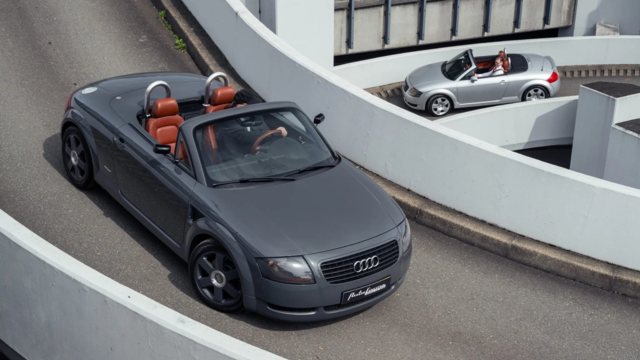
Coachbuilder Recreates the 1995 Audi TTS Concept
Verdad Gallardo
Every Audi V10 Car Ranked!
Joe Kucinski
AudiWorld Member
Joined: Dec 2024
Posts: 208
Likes: 69
Kudos on posting!
This is a great bit of detail for the testing/diagnostic purposes, but it mostly ignores the existing/recurrent fault codes his car has, and that to successfully store the new height measured at each wheel, which is required so that the car can make it's final leveling adjustments, you have to take the measurements on a level surface and there can be no fault codes present in the air susp system. Even then the procedure to enter the new values may still error-out/fail to store the new values, etc. For this reason, the final step in the leveling procedure is to immediately look for fault codes in that control module and reverify it saved the new height measurements...or not. If it did save them, then the car also goes through an automated 're-leveling' based on the new measurements entered, etc.
This is a great bit of detail for the testing/diagnostic purposes, but it mostly ignores the existing/recurrent fault codes his car has, and that to successfully store the new height measured at each wheel, which is required so that the car can make it's final leveling adjustments, you have to take the measurements on a level surface and there can be no fault codes present in the air susp system. Even then the procedure to enter the new values may still error-out/fail to store the new values, etc. For this reason, the final step in the leveling procedure is to immediately look for fault codes in that control module and reverify it saved the new height measurements...or not. If it did save them, then the car also goes through an automated 're-leveling' based on the new measurements entered, etc.
Regardless of stored faults, incorrect calibration, etc, the system is ridiculously easy to check for basic function using VCDS.
Those residual pressure valves are not a typical fitment on what is otherwise a pretty common air suspension system, and they clearly have a finite life.
No point wasting time trying to pin down the reason for an overheated pump, etc when you can quickly just check that the car will actually raise and lower at each corner. Chances are it won’t.
A basic function check before chasing faults is the logical way to proceed. If it won’t raise and lower on each corner, calibration or diagnosis might be possible but will probably be futile.

Thread
Thread Starter
Forum
Replies
Last Post
Luxus Panzer
Audi 90 / 80 / Coupe quattro / Cabriolet
1
Oct 5, 2021 07:02 PM
Always Overcharged
A8 / S8 (D2 Platform) Discussion
0
Nov 18, 2005 09:11 PM
gliTTch
TT (Mk1) Discussion
0
Apr 27, 2004 01:35 AM
S4iscool
TT (Mk1) Discussion
4
Sep 18, 2003 02:30 PM