


Recs for miscellaneous upgrades— 3.0tfsi

Thread Starter
AudiWorld Junior Member
Joined: Jan 2025
Posts: 42
Likes: 7
From: New Hampshire, USA
 Recs for miscellaneous upgrades— 3.0tfsi
I’m starting to think a lot more seriously about performance upgrades for my Q— and I think I want to start with suspension and handling.
I’ll kick off this thread with a question: what’s my best course of action for improving handling? I tried looking for front strut tower braces, and couldn’t find any that seemed legit. I know lowering springs also seem to help a lot, but I’m not sure if I’d like to take that route just yet.
Any and all suggestions appreciated!
I’ll kick off this thread with a question: what’s my best course of action for improving handling? I tried looking for front strut tower braces, and couldn’t find any that seemed legit. I know lowering springs also seem to help a lot, but I’m not sure if I’d like to take that route just yet.
Any and all suggestions appreciated!

AudiWorld Super User


Joined: Jan 2021
Posts: 4,565
Likes: 1,456
From: USA - NM
Most owners looking to invest for better stability upgrade to (used) Cayenne sway bars/ (new) bushings to match the sway bars, etc.
If your car has some mileage on it, then just replacing those old, worn-out, OE sway bar bushings front/rear can change the feel of the car significantly, and this is a very, very simple DIY job on the Q7, and the frigging new bushings are sooo cheap at FCP Euro. If ordering new sway bar bushings, just remember the price is for one half...you need two halves for each side of the sway bar, so 4 bushing pieces front, and 4 bushing pieces rear; that's also why so easy to replace these, as they just 'snap' together. You do need to pay attention to the orientation of the old bushing and match it exactly when installing the new bushings.
FWIW:
On my 130k miles Q7, which was banging over any crack in the pavement, just replacing the sway bar bushings has resolved about 85-90% of harshness felt through the suspension, and of course, new sway bar bushings mean the sway bar does what it is designed to do, so it corners and drives/handles better too. I was going to swap the end links front/rear also, but found those were actually in pretty decent shape, and the front ones have such long bolts you can't just pop them out as it hits the axle boot, so that' why I didn't swap those end-links. I'm sure that would have improved even further, but it is interesting to drive with the old end-links but the new bushings in place, as the sway bar bushings were clearly 'toast' on my Q7.
If your car has some mileage on it, then just replacing those old, worn-out, OE sway bar bushings front/rear can change the feel of the car significantly, and this is a very, very simple DIY job on the Q7, and the frigging new bushings are sooo cheap at FCP Euro. If ordering new sway bar bushings, just remember the price is for one half...you need two halves for each side of the sway bar, so 4 bushing pieces front, and 4 bushing pieces rear; that's also why so easy to replace these, as they just 'snap' together. You do need to pay attention to the orientation of the old bushing and match it exactly when installing the new bushings.
FWIW:
On my 130k miles Q7, which was banging over any crack in the pavement, just replacing the sway bar bushings has resolved about 85-90% of harshness felt through the suspension, and of course, new sway bar bushings mean the sway bar does what it is designed to do, so it corners and drives/handles better too. I was going to swap the end links front/rear also, but found those were actually in pretty decent shape, and the front ones have such long bolts you can't just pop them out as it hits the axle boot, so that' why I didn't swap those end-links. I'm sure that would have improved even further, but it is interesting to drive with the old end-links but the new bushings in place, as the sway bar bushings were clearly 'toast' on my Q7.
Thread Starter
AudiWorld Junior Member
Joined: Jan 2025
Posts: 42
Likes: 7
From: New Hampshire, USA
What are some telltale signs of them being in need of replacing?

AudiWorld Senior Member


Joined: Sep 2019
Posts: 1,272
Likes: 261
From: Canada, Toronto
I just had my front end sway bar links replaced with Lemforder, and new original sway bar bushings. It tightened up the car in the front tremendously. It is so solid on the steering wheel now, there is zero play and softness like it had before. It holds line WAAAY better and feels really noticeably better.
After this, Im definitely gonna do the rear end too.
I also put Unitronic Stage 1 on it and it is a literally different car now. (mine is 280hp) Jump in power is substantial, and car is literally angry now once it hits over 2200-2300rpm. Unitronic says 374hp, and it definitelly feels that it gained at least 50-70hp over stock.
Shame I never measured acceleration while stock, cause this is night and day difference. I feel its 2 sec faster to 100
After this, Im definitely gonna do the rear end too.
I also put Unitronic Stage 1 on it and it is a literally different car now. (mine is 280hp) Jump in power is substantial, and car is literally angry now once it hits over 2200-2300rpm. Unitronic says 374hp, and it definitelly feels that it gained at least 50-70hp over stock.
Shame I never measured acceleration while stock, cause this is night and day difference. I feel its 2 sec faster to 100
AudiWorld Super User
Joined: Jan 2021
Posts: 4,565
Likes: 1,456
From: USA - NM
Did You Know?
Definitely sounds like it might be worth a go. I’m sitting near 160k on my 2015. Thing is, I’m not entirely sure what’s been replaced/serviced and what hasn’t (talking with the local dealer I purchased it from about service records).
What are some telltale signs of them being in need of replacing?
What are some telltale signs of them being in need of replacing?
I asked around at the dealer, and service dept sent me over to the sales department for the service records on our used Q7s...it was free too, as oddly, they are the ones who can get those for you. Very odd. While it's helpful to know (more so for a TDI) the history, the best thing you can do is simply go over the car fully or pay someone to do it, if you not sure what you are looking at/looking for when checking for loose/worn suspension bits. Getting an alignment check (normally free) is another way to help identify worn components in suspension/steering.
As for symptoms, I'll just copy/paste, so I don't leave any out:
Symptoms of failed sway bar bushings include:
- Rattling and squeaky noises from underneath the car
- Poor suspension response
- Bumpy rides
- Increased body roll
- Uneven tire wear
- Steering issues
- Clunking noise
- Knocking sound on uneven road
- Lack of stability when driving
- Noise going over speed bumps
- Poor handling when turning
Remember, this is just the bushings symptoms; the end links rubber bushings also get weaker/crack/tear over time, and can contribute significantly to the above symptoms.
I'm certain (on my Q7) swapping out the end-links front/rear for new will also make a notable difference I can feel, as those old ones have cracked/worn rubber bushings in them, but I was very pleasantly surprised by just how much the driving experience improved and the harshness felt constantly prior was almost completely abated by replacing ONLY the sway bar mounting bushings on both the front and rear sway bars...that's all I did. End-links replacement; I've decided I'm gonna do those when I'm replacing the brakes soon, and have it all apart.
OK, unrelated, but a cool fact just learned: After a battery disconnect (swap battery), the power window switches lose their one-touch up/down capability until you retrain them. You just have to hold the switch up/down for couple seconds to retrain/reset that function. Dunno bout y'all, but I was sure wondering why that one-touch up/down function stopped working, seemingly randomly, but it wasn't random at all.
 It's just part of the Germanic design of the Q7.
Last edited by '10Q7TDI_Prestige'; Mar 29, 2025 at 06:15 PM.

AudiWorld Member
Joined: Aug 2017
Posts: 137
Likes: 25
I just had my front end sway bar links replaced with Lemforder, and new original sway bar bushings. It tightened up the car in the front tremendously. It is so solid on the steering wheel now, there is zero play and softness like it had before. It holds line WAAAY better and feels really noticeably better.
After this, Im definitely gonna do the rear end too.
I also put Unitronic Stage 1 on it and it is a literally different car now. (mine is 280hp) Jump in power is substantial, and car is literally angry now once it hits over 2200-2300rpm. Unitronic says 374hp, and it definitelly feels that it gained at least 50-70hp over stock.
Shame I never measured acceleration while stock, cause this is night and day difference. I feel its 2 sec faster to 100
After this, Im definitely gonna do the rear end too.
I also put Unitronic Stage 1 on it and it is a literally different car now. (mine is 280hp) Jump in power is substantial, and car is literally angry now once it hits over 2200-2300rpm. Unitronic says 374hp, and it definitelly feels that it gained at least 50-70hp over stock.
Shame I never measured acceleration while stock, cause this is night and day difference. I feel its 2 sec faster to 100
AudiWorld Senior Member
Joined: Sep 2019
Posts: 1,272
Likes: 261
From: Canada, Toronto
I am 99.9% sure its not rotors as there is no pedal vibration as usually when pads/rotors are not good. (had this happen multiple times on more cars, all will transfer to brake pedal. But, I might be wrong lol.
My mechanic mentioned something with control arm, Im not sure what can a control arm do to cause a steering wheel shimmy. Its something connected to rotational mass.
Trending Topics
AudiWorld Super User
Joined: Jan 2021
Posts: 4,565
Likes: 1,456
From: USA - NM
Look at pages 4-10 on this TSB, Which is correct wheel mounting:
https://static.nhtsa.gov/odi/tsbs/20...22116-9999.pdf
The most common causes for a shaking steering wheel in Audi Q7 are unbalanced wheels, misaligned wheels, tire damage, bent rim, bad wheel bearing, worn engine mounts and loose lug nuts.
Less common causes are bad axle, worn suspension (control arm bushings and/ or ball joints worn) or steering parts or incorrect tire pressure.
https://static.nhtsa.gov/odi/tsbs/20...22116-9999.pdf
The most common causes for a shaking steering wheel in Audi Q7 are unbalanced wheels, misaligned wheels, tire damage, bent rim, bad wheel bearing, worn engine mounts and loose lug nuts.
Less common causes are bad axle, worn suspension (control arm bushings and/ or ball joints worn) or steering parts or incorrect tire pressure.
AudiWorld Stories
Bringing Audi to Life for Audi Fans

10 Strangest Audi Designs That Actually Made Production
Joe Kucinski
2027 Audi Q7 and SQ7: Audi Upgraded EVERYTHING!
Michael S. Palmer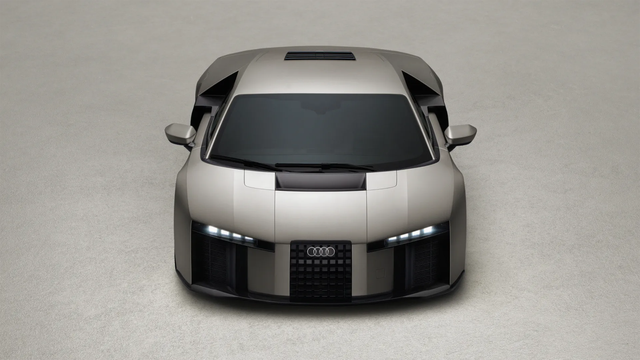
Audi Unveils Absurdly Cool New Supercar: 10 Things You Need to Know!
Verdad Gallardo
The Highs & Lows of Every Audi C-Class Generation
Joe Kucinski
Top 10 Most Expensive Audis Ever Sold on Bring-A-Trailer
Brett Foote
10 Audi Features & Options We Miss the Most!
Joe Kucinski
Audi Recreates Crazy-Looking Speed Record Breaker From 1935
Verdad Gallardo
Coachbuilder Recreates the 1995 Audi TTS Concept
Verdad Gallardo
Every Audi V10 Car Ranked!
Joe Kucinski
AudiWorld Senior Member
Joined: Sep 2019
Posts: 1,272
Likes: 261
From: Canada, Toronto
Look at pages 4-10 on this TSB, Which is correct wheel mounting:
https://static.nhtsa.gov/odi/tsbs/20...22116-9999.pdf
The most common causes for a shaking steering wheel in Audi Q7 are unbalanced wheels, misaligned wheels, tire damage, bent rim, bad wheel bearing, worn engine mounts and loose lug nuts.
Less common causes are bad axle, worn suspension (control arm bushings and/ or ball joints worn) or steering parts or incorrect tire pressure.
https://static.nhtsa.gov/odi/tsbs/20...22116-9999.pdf
The most common causes for a shaking steering wheel in Audi Q7 are unbalanced wheels, misaligned wheels, tire damage, bent rim, bad wheel bearing, worn engine mounts and loose lug nuts.
Less common causes are bad axle, worn suspension (control arm bushings and/ or ball joints worn) or steering parts or incorrect tire pressure.
AudiWorld Super User
Joined: Jan 2021
Posts: 4,565
Likes: 1,456
From: USA - NM
Following the TSB simply eliminates the self-inflicted causality of the shimmy/shaking steering wheel syndrome.
That's also why there's an entire laundry list of other Q7-specific, known vibration/steering wheel shaking... underlying causes included in that post for a reason. Worn out parts set up small vibrations, and then small vibrations eventually reach a point of resonance with other components, and the resonance becomes a noteworthy shimmy/shaking event you can feel. Over time the problem gets worse as the wear tolerances increase.
That's exactly why if you accelerate through the speed where you feel the shimmy, it will normally drop off quickly as the speed increases, or conversely, as you slow and drop below a certain speed, etc. This isn't rocket science, it's just a heavy older vehicle with heavy duty suspension bits that can last a relatively long time, but not forever. Because these Q7 control arms and ball joints are overbuilt and under a lot of tension, you need to unload the suspension to be able to check all the bits for looseness and wear beyond doing just a simple visual examination, whereas on most sedans a mechanic will just walk right up with the car on the ground and grab/shake the wheels at different points to feel for any play happening in those same parts. You can't do the wear checks that way on a Q7. You need it up in the air and a decent prybar and floor jack to be able to check things for any wear 'slop' properly.
IMHO, when your mechanic tells you they think your control arms (really the anchor/mounting bushings & ball joints that support the wheels) are the issue, and will need replacing, well, then maybe you ought to ask your mechanic for further details about why worn bushings or ball joints on your control arms would have this effect, and ask them to point out and/or demonstrate the worn components testing on your car, which indicates they are worn out, etc.
This is a Q7. My '10 Q7 TDI weighs nearly 3 tons (per the driver's door placard on B-pillar). That should help put things in perspective of how sturdily overbuilt these 4L Q7s suspensions were designed from the factory to be able to manage so much weight and still drive/handle quite well. Worn parts cause vibrations and when vibrations amongst parts hit that 'sweet spot' of resonance, that's when you get shaking & shimmy symptoms that you feel inside the car. Then you either have to do the work yourself, or pay someone to go over it to locate the worn parts.
Last edited by '10Q7TDI_Prestige'; Apr 20, 2025 at 05:05 PM.