


Tires - Nitrogen

Thread Starter
AudiWorld Member

Joined: May 2012
Posts: 374
Likes: 0
 Tires - Nitrogen
When I took delivery of my A6, the tires had been filled with nitrogen by the dealer. Im about to swap my summer Pirellis for a set of all season Bridgestone RE970AS. The shop that will swap the tires does not offer nitrogen.
I've read a bunch of stuff that leads me to believe that nitrogen generally is a marketing ploy with little real benefit, but before I brush it aside as necessary, I thought I would check here first. My biggest concern is whether NOT filling with nitrogen might adversely affect the function of TPMS especially here at altitude in Colorado where temperature swings are dramatic (a little less stable tire pressure I suspect).
Any experience or thoughts?
Thanks in advance!
I've read a bunch of stuff that leads me to believe that nitrogen generally is a marketing ploy with little real benefit, but before I brush it aside as necessary, I thought I would check here first. My biggest concern is whether NOT filling with nitrogen might adversely affect the function of TPMS especially here at altitude in Colorado where temperature swings are dramatic (a little less stable tire pressure I suspect).
Any experience or thoughts?
Thanks in advance!

AudiWorld Member
Joined: Dec 2005
Posts: 145
Likes: 0
Short answer: there is no perceptible benefit to having nitrogen only in your tires. Dry air is already 78% nitrogen.
Long answer:
http://www.straightdope.com/columns/...instead-of-air
Long answer:
http://www.straightdope.com/columns/...instead-of-air
Super Moderator


Joined: Jul 2001
Posts: 13,980
Likes: 124
From: SE Massachusetts, U.S.
It's only a placebo. An extra 22% more nitrogen isn't going to provide benefit to anyone except the guys selling it.
Now, using helium is a different story. It will make your car lighter resulting in improved handling in the corners and provide a much softer ride. Your car will seem to just float on a cloud down the highway. (Note: A side effect is car occupants may talk in a much higher "Donald Duck" pitch).
Not recommended in tunnels or on slippery surfaces.
Now, using helium is a different story. It will make your car lighter resulting in improved handling in the corners and provide a much softer ride. Your car will seem to just float on a cloud down the highway. (Note: A side effect is car occupants may talk in a much higher "Donald Duck" pitch).
Not recommended in tunnels or on slippery surfaces.

AudiWorld Senior Member
Joined: Aug 2011
Posts: 1,218
Likes: 11
From: California, US
When I took delivery of my A6, the tires had been filled with nitrogen by the dealer. Im about to swap my summer Pirellis for a set of all season Bridgestone RE970AS. The shop that will swap the tires does not offer nitrogen.
I've read a bunch of stuff that leads me to believe that nitrogen generally is a marketing ploy with little real benefit, but before I brush it aside as necessary, I thought I would check here first. My biggest concern is whether NOT filling with nitrogen might adversely affect the function of TPMS especially here at altitude in Colorado where temperature swings are dramatic (a little less stable tire pressure I suspect).
Any experience or thoughts?
Thanks in advance!
I've read a bunch of stuff that leads me to believe that nitrogen generally is a marketing ploy with little real benefit, but before I brush it aside as necessary, I thought I would check here first. My biggest concern is whether NOT filling with nitrogen might adversely affect the function of TPMS especially here at altitude in Colorado where temperature swings are dramatic (a little less stable tire pressure I suspect).
Any experience or thoughts?
Thanks in advance!
They told me that if I have to put in regular air or get a new set of tires, that I can come back and they will Re-Fill my tires with Nitrogen.
You should see if your dealer will do the same for you.
Thread Starter
AudiWorld Member
Joined: May 2012
Posts: 374
Likes: 0
It's only a placebo. An extra 22% more nitrogen isn't going to provide benefit to anyone except the guys selling it.
Now, using helium is a different story. It will make your car lighter resulting in improved handling in the corners and provide a much softer ride. Your car will seem to just float on a cloud down the highway. (Note: A side effect is car occupants may talk in a much higher "Donald Duck" pitch).
Not recommended in tunnels or on slippery surfaces.
Now, using helium is a different story. It will make your car lighter resulting in improved handling in the corners and provide a much softer ride. Your car will seem to just float on a cloud down the highway. (Note: A side effect is car occupants may talk in a much higher "Donald Duck" pitch).
Not recommended in tunnels or on slippery surfaces.


AudiWorld Super User


Joined: Feb 2010
Posts: 2,953
Likes: 152
From: Lawrenceville, NJ
Short answer: there is no perceptible benefit to having nitrogen only in your tires. Dry air is already 78% nitrogen.
Long answer:
http://www.straightdope.com/columns/...instead-of-air
Long answer:
http://www.straightdope.com/columns/...instead-of-air
For every 10 degrees of weather change, you get 1lb of pressure change. Say you fill up your tires(cold of course)on a nice sunny 80degree day to a hypothetical 34lbs. If you dont check your tires again until its winter and a nice blustery 30 degrees out, your tires will have lost pressure accordingly bringing them down to 29lbs based on the principle.
However, because nitrogen doesnt get effected by these temperature properties, your tires wont drop from the original inflated pressure. You wont have to spend as much time checking on a monthly basis that your tires are inflated properly based on the outside temperature.
Also, the pressure that you filled up your tires(when cold) stay that pressure regardless how hard you drive. So if you want the contact patch to stay the same at a certain pressure, it will.
That is the benefit to putting nitrogen in your tires.
Last edited by HyperS4; Oct 12, 2012 at 09:23 AM.
Trending Topics

Audiworld Junior Member
Joined: Mar 2012
Posts: 95
Likes: 0
From: Oak Harbor, WA
The problem with that link is they only argue the fact that your tires wont lose any air through your sidewalls in a comparison between air and nitrogen. They dont talk about expansion at all.
For every 10 degrees of weather change, you get 1lb of pressure change. Say you fill up your tires(cold of course)on a nice sunny 80degree day to a hypothetical 34lbs. If you dont check your tires again until its winter and a nice blustery 30 degrees out, your tires will have lost pressure accordingly bringing them down to 29lbs based on the principle.
However, because nitrogen doesnt get effected by these temperature properties, your tires wont drop from the original inflated pressure. You wont have to spend as much time checking on a monthly basis that your tires are inflated properly based on the outside temperature.
Also, the pressure that you filled up your tires(when cold) stay that pressure regardless how hard you drive. So if you want the contact patch to stay the same at a certain pressure, it will.
That is the benefit to putting nitrogen in your tires.
For every 10 degrees of weather change, you get 1lb of pressure change. Say you fill up your tires(cold of course)on a nice sunny 80degree day to a hypothetical 34lbs. If you dont check your tires again until its winter and a nice blustery 30 degrees out, your tires will have lost pressure accordingly bringing them down to 29lbs based on the principle.
However, because nitrogen doesnt get effected by these temperature properties, your tires wont drop from the original inflated pressure. You wont have to spend as much time checking on a monthly basis that your tires are inflated properly based on the outside temperature.
Also, the pressure that you filled up your tires(when cold) stay that pressure regardless how hard you drive. So if you want the contact patch to stay the same at a certain pressure, it will.
That is the benefit to putting nitrogen in your tires.
AudiWorld Stories
Bringing Audi to Life for Audi Fans

Top 10 Most Expensive Audis Ever Sold on Bring-A-Trailer
Brett Foote
10 Audi Features & Options We Miss the Most!
Joe Kucinski
Audi Recreates Crazy-Looking Speed Record Breaker From 1935
Verdad Gallardo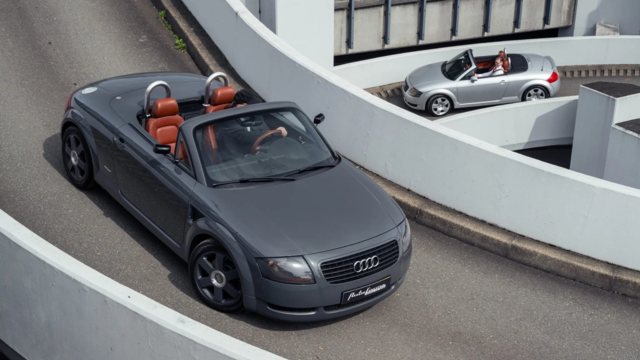
Coachbuilder Recreates the 1995 Audi TTS Concept
Verdad Gallardo
Every Audi V10 Car Ranked!
Joe Kucinski
9 Audi Designs That Aged Like Fine Wine
Verdad Gallardo
2026 Audi Q5 Buyer's Guide (Every Model Explained)
Brett Foote
Ranking Every Current Audi 'S' Model From Worst to First!
Joe Kucinski
10 Best Audis That are FINALLY LEGAL to Import to the U.S.!
Joe Kucinski
Audiworld Junior Member
Joined: Oct 2012
Posts: 93
Likes: 0
Now, using helium is a different story. It will make your car lighter resulting in improved handling in the corners and provide a much softer ride. Your car will seem to just float on a cloud down the highway. (Note: A side effect is car occupants may talk in a much higher "Donald Duck" pitch).
Not recommended in tunnels or on slippery surfaces.
Not recommended in tunnels or on slippery surfaces.

Super Moderator
Joined: Jul 2001
Posts: 13,980
Likes: 124
From: SE Massachusetts, U.S.