



1988 audi 5000s quattro random no spark issue

AudiWorld Super User
Joined: Apr 2002
Posts: 3,067
Likes: 0

Earlier you stated that you replaced the distributor. Did you ever reset the distributor timing? Follow your Bentley on how to reset distributor timing.
I recall on the turbo model that the cam (hall sender) and the crank sensor must be in sync before the ECU will send a signal to the coil to produce a spark. If the cam and crank signal were slightly out of sync then the ecu will not send the signal to the coil.
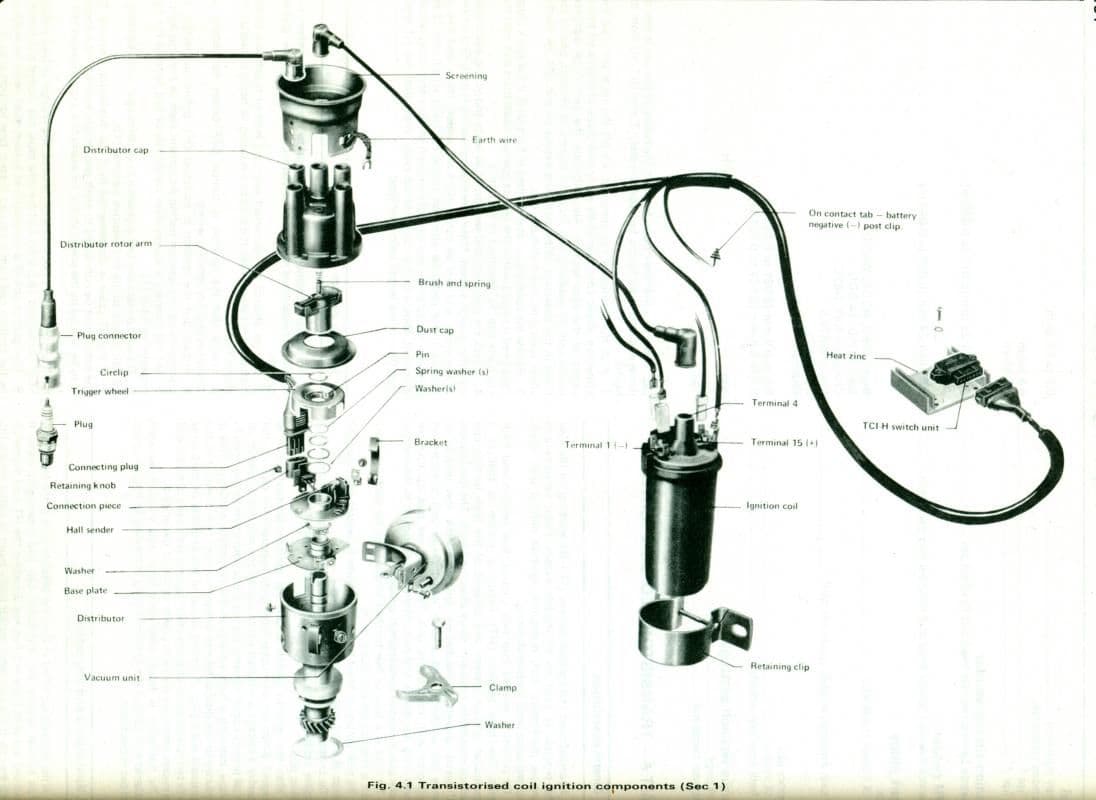
I recall on the turbo model that the cam (hall sender) and the crank sensor must be in sync before the ECU will send a signal to the coil to produce a spark. If the cam and crank signal were slightly out of sync then the ecu will not send the signal to the coil.
AudiWorld Super User
Joined: Apr 2002
Posts: 3,067
Likes: 0
I would verify if the distributor is timed correctly. Perhaps you moved the distributor when doing the rotor. You can place a reference mark on the distributor housing and try rotating it either clockwise or counter clockwise and see if the engine will start.
As I recall there are no codes stored when the crank and cam signal were out of sync for the turbo engine. The ECU will see both signal, but they would be out of sync and it would not send the trigger signal to the coil.
As I recall there are no codes stored when the crank and cam signal were out of sync for the turbo engine. The ECU will see both signal, but they would be out of sync and it would not send the trigger signal to the coil.
AudiWorld Super User
Joined: Apr 2002
Posts: 3,067
Likes: 0

Thread Starter
Audiworld Junior Member
Joined: Jul 2006
Posts: 59
Likes: 0
that is an interesting thread. in my particular case, i'm wondering why it will sometimes start up and run just fine after sitting for a while when i have not touched anything. i would think that if the distributor was out of alignment, it would never start/run.
in any case, i'll re-inspect the distributor and rotor again just to be triple sure something isn't out of whack in that area. thanks for the link!
in any case, i'll re-inspect the distributor and rotor again just to be triple sure something isn't out of whack in that area. thanks for the link!

AudiWorld Member
Joined: Dec 2002
Posts: 143
Likes: 0
Distributor Hall Effect Sensor and connector (10V MC Engine)
Remove the three terminal connector from the distributor for the hall effect sensor, using a DMM check for ~12VDC, (at least 9 Volts) between terminals 1 (Red/Black wire) and 3 (Brown/Red), the two outer connector pins with the ignition key on. Pin 1 is the first terminal on the left with the spring release clip wire towards the top. The 10V Engine ECU supplies ~+12V to this hall effect connector at pins 1 and 3.
NOTE: The 20V 3B engine Hall Effect sensor will only have 4.5 to 5.5 volts between Pin 1 and 3 as the Motronic ECU only supplies approx. 5VDC to the Hall Effect Sensor
Check the connection in the plug from the hall sender on the distributor. In some cases the female contacts may be loose and are not making a good connection. Use a small dental pick to push the terminals together to ensure a good tight connection. Re-install this connector onto the distributor connection.
Use a DMM and check for low (<1.0 ohm) resistance between pin 1 and engine ground, in one case, resistance between this terminal and the ECU caused a no start condition, even though 12V was measured across pins 1 and 3.
Peel back the rubber boot on this hall sensor connector and connect a DMM to terminals 1 and 2 with the ignition key on. The voltage measured across pins 1 and 2 will be ~4 volts when the distributor hall sensor is shielded by the metal cover (hat) on the distributor shaft. The voltage should be between 0-0.5 volts when the hall sensor is not shielded by the metal hat. You can remove the distributor cap, and slowly rotate the engine around while you watch the voltage measured at pins 1 and 2.
A better test for the Hall Effect Sensor, is to make up a "low voltage" LED test light (LED with 120 ohm resistor in series) and connect the positive (+) side of the LED test light to terminal 1 (Red/Black wire) and the negative (-) side of the LED test light to terminal 2 (Green Wire) of the hall effect connector. This test is done with the connector plugged on to the distributor connector, and by pulling the rubber boot back off the connector to allow back probing the connector terminals.
The low voltage LED test light should flicker on/off when you crank the engine over during starting to indicate the hall effect sensor inside the distributor is working correctly.
Last edited by upallnight; Mar 26, 2012 at 07:32 PM.
Thread Starter
Audiworld Junior Member
Joined: Jul 2006
Posts: 59
Likes: 0
i thought i would update this thread. i finally broke down and brought the car in to an independent german car specialist, explaining all of the various things i've tried to fix this so far.
he ordered an ignition control module (DME/computer in the footwell) and after swapping it, the car runs like a champ and starts up every time!
i don't think i would have ever figured this out on my own.
thanks to everyone on here for their suggestions!
he ordered an ignition control module (DME/computer in the footwell) and after swapping it, the car runs like a champ and starts up every time!
i don't think i would have ever figured this out on my own.
thanks to everyone on here for their suggestions!
AudiWorld Stories
Bringing Audi to Life for Audi Fans

Top 10 Most Expensive Audis Ever Sold on Bring-A-Trailer
Brett Foote
10 Audi Features & Options We Miss the Most!
Joe Kucinski
Audi Recreates Crazy-Looking Speed Record Breaker From 1935
Verdad Gallardo
Coachbuilder Recreates the 1995 Audi TTS Concept
Verdad Gallardo
Every Audi V10 Car Ranked!
Joe Kucinski
9 Audi Designs That Aged Like Fine Wine
Verdad Gallardo
2026 Audi Q5 Buyer's Guide (Every Model Explained)
Brett Foote
Ranking Every Current Audi 'S' Model From Worst to First!
Joe Kucinski
10 Best Audis That are FINALLY LEGAL to Import to the U.S.!
Joe Kucinski
Thread
Thread Starter
Forum
Replies
Last Post
calleth
Audi 90 / 80 / Coupe quattro / Cabriolet
0
May 13, 2009 02:51 AM
Pieter
Audi 100 / A6 (C4 Platform)
8
Feb 6, 2009 08:23 PM
