


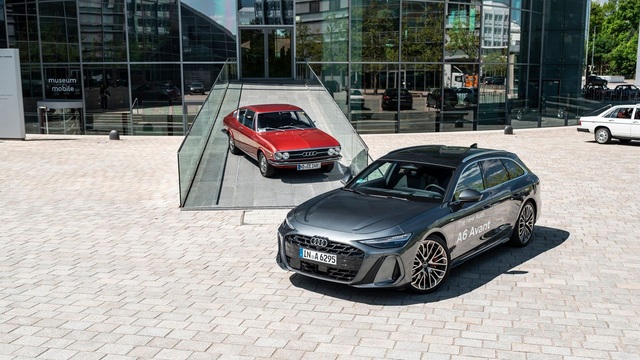
tt or boxster ?
Guest
Posts: n/a
 TT has some fundamental problems
Don't get me wrong. I think the TT's styling is awesome (it tends to grow on you after awhile). But in terms of a driving experience, the 225hp TT has several shortcomings compared to the Boxster.<p>1. 60/40 weight distribution<br>2. 4 cyl engine - harsher and peakier than a flat six. Engine is also in a high end of tune on the TT compared with the normally aspirated Boxster -- meaning if you want more power on the TT you probably can't get much as it's nearly maxed out. On the Boxster you can add a supercharger for another 100 to 150 hp.<br>3. TT quattro is not the same as previous quattros due to transverse mounting of the engine. As a result, this is a new and unproven design compared with the refined quattros of the past.<br>4. TT handling is not in the same league as the Boxster. Press reviews cite moderate to heavy understeer particularly when pushed hard. The 225hp TT has a different rear suspension than the 180hp variant, but there's only so much you can work with. I wonder if the tiny coil spring is the problem.<br>5. Build quality is unknown. I know Audi has had engines made in Gyor for sometime, but is this the first cars assembled there? If so, I wouldn't expect the build quality of the A4 (superior to Boxster from what I've heard).<p>As for the TTS, at least the S2000 is uglier. Without the roof, the TT design looks like a bathtub and the use of chrome sink trap roll bars doesn't help. <p>Personally, if Audi were to adapt the TT styling into the A4, I might have to sell my Boxster. Autoweek hinted that this would be the 2000 A4 along with a 2 dr hatchback model. Given the 99.5 styling revisions, I doubt if this will be reality, but I've always longed for the next VW Corrado, and an A4 hatchback with TT styling would be a worthy successor.<p>
Guest
Posts: n/a
Not so fast. A long, but necessary, followup.
Jared:<br>Your "data" applies to the 180 bhp, front wheel drive car. The authority I've read (I have all the magazines) refutes everything you've stated insofar as the 225 bhp, quattro is concerned (which is the car Stefan queried about). Here's my proof. take it or leave it, in order:<br>1. Automobile Magazine, October 1998, Vol. 13, No. 7, page 53, right column, discussing the 225 bhp TT--"Weight distribution front/rear 51%/49%." I have not been able to confirm or deny this figure, since most cars tested in the magazines have been the 180 bhp, front wheel drive variant. Regardless, the Quattro variant (in either 180 of 225 bhp) will have better front/rear weight distribution than your figure suggests.<br>2. Pure conjecture--we all know the 225 bhp TT's engine has undergone significant modification to cope, indeed create, the additional horsepower. Larger turbo, second intercooler, as well as "stronger pistons, reinforced crankshaft bearings, redesigned tumble-effect combustion chambers, new intake and exhaust systems." See id. Also, even the 180 bhp engine "never grows harsh." Road & Track, November 1998, page 64. Additionally, "Audi has obviously worked hard on its five-valve1.8 liter turbo engine--even the hot 225-hp version is so tractable and refined that you wonder if it is capable of blistering performance." Car and Driver, November 1998, Volume 44, Number 5, page 53. <br>3. Jared--when you bought your Boxter, you could not be 100% certain that the mechanicals were "proven" either because Porsche had never used a water-cooled engine before. Anything new is unproven. Plus, I doubt Audi is interested in adopting a troublesome quattro system. Why would Audi throw its revenue (and reputation) into warranty repairs?<br>4. Again, you speak only of the front wheel drive car. "Overall, for at-the-limit handling, the Quattro version clearly held an edge, feeling more pinned down and confidence inspiring." Motor Trend, December 1998, page 45. "Traction is riveting, grip is tenacious, and the roadholding is of the Super Glue kind." Automobile Magazine, page 53. "The striking two-plus-two is quicker off the mark as well as faster overall than the Porsche Boxster, the Mercedes Benz SLK320, and the BMW Z3 2.8 coupe." Automobile Magazine, page 50. <br>Keep in mind that the 180 bhp and 225 bhp Quattro cars are equipped with the same suspension, the rear being multilink independent with double wishbones, trailing arms, coil springs, damper struts, and anti-roll bar. The 180 bhp front wheel drive car has trailing arms on a torsion beam axle and an integral roll bar in the rear. To say that "there's only so much to work with" belies the automotive press on both cars. The Quattro cars reportedly have totally different (better) dynamics as a result of torque-free steering, a totally independent multilink rear suspension in back, better weight distribution, and Quattro. When the magazines say "Big Trouble (for the competition, that is)," and "From a smiles-per-mile, fun-per-run, adrenaline-per-corner point of view, the compact TT coupe from Audi will give the competition a hard run for the money," they are looking sqaure at your coveted Boxster. Car and Driver, index page, and Automobile Magazine, page 53, respectively. <br>5. Let us Porschefiles not forget--most Boxsters in the United States were assembled in Finland, not Germany. How can you cast dispersion on the TT when the Boxster should receive the same shadow of doubt? Also, lest you forget that Finnish Boxsters have been notorious for poor paint quality. <br>Build quality of early TT's has been highly touted in the automotive press. In fact, that is one of the draws of the car. And yes, the build quality of the A4 is better than the Boxster. I have driven the Boxster and it is a decent car. But I was not impressed with the rigidity of the car--it rattled like a cheap kit-car over bumps. Admittedly, it had 25K miles on the odometer. But still. <p>What do you think about that?<p>
Guest
Posts: n/a
Re: Not so fast. A long, but necessary, followup.
"What do you think about that?" I think you need to relax a little. I'm not flaming the TT, remember I do like the car and it's styling. But I'm not confident of it's handling.<p>Regarding the "authority" of U.S. ragazines... you do realize that their number one purpose is to sell advertisements? Please separate the objective (numbers and measurements) from the subjective (glowing adjectives which are recycled in every review). If you want unbiased objectivity without the fear of losing advertisers, check out the British reviews of the TT. They lost it in the twisties. And yes it was the 225 variant.<p>1. I pulled the weight distribution numbers from Autoweek 9/28-10/4, 60/40 refers to the quattro. The 180 is 66/34. <br>2. Common sense. Audi has squeezed 225 hp out of a 1.8 liter four. That's a high state of tune. If you're trying to argue that an I4 is smoother than a flat or V6, a reality check is in order. <br>3. Porsche has used water cooled flat sixes in it's race cars over the past decade. My concern was with the new quattro... an electrically controlled unit compared to the traditional Torsen mechanical center differential. The application of power is not the same - it comes on very suddenly and up to 100% power bias. I'd be concerned about being at the limits of handling and having the new quattro kick in. <br>4. "Belie the automotive press"? ROFLMAO Quit quoting recycled feelgood goobledegook. The 180 TT exhibited moderate to heavy understeer in R/T skidpad and slalom tests. The British press said the TT understeers like a pig. I hope the 225 multilink does address this, but they don't have much room to work in. Look at the suspension schematics. <br>5. Valmet Finland has been building cars (Saab convertibles) all along. The Finnish paint process is regarded to have a better clear coat and less orange peel than the German process. Porsche has always built cars in other car plants. I was asking if Gyor built anything other than engines. Can you expect A4 quality if it's built in a plant where they've never built a car? <br>
Guest
Posts: n/a
Re: Not so fast. A long, but necessary, followup.
Jared, let's clear one thing up that keeps appearing in your comments. The 180hp TT is just as likey to have Quattro as the 225hp version. There will be a 180hp car and a 225hp car, with and without Quattro. The 225hp car without Quattro has the same rear suspension as the 180hp non-Quattro car.<p>As far as a four cylinder car not being as smooth as a 6, compare a Honda VTEC to a GM V6 and tell me if that's still true. The Honda engine is much smoother, thereby proving that "less cylinders is rougher" a flawed theory. With the degree of balancing, counter-balancing and the precision of CAD, that hard fast rule is pretty dated.<p>And talk about ROFLMAO, some of the garbage I read in the British car rags makes ours look scientific! They are much more concerned about being clever than being accurate. Does "understeers like a pig" sound pretty objective and serious to you?
Guest
Posts: n/a
Blondes or Brunettes, Jared?
Obviously you like the Boxster better; after all, you say you own one. Great. It's a fine car. Just don't be suprised to get your cage rattled when you post your thoughts on a webpage meant for Audi enthusiasts. That's all. Happy motoring.<br>PS--thanks for your concern, but I am plenty relaxed.
Trending Topics
AudiWorld Stories
Bringing Audi to Life for Audi Fans

Top 10 Most Expensive Audis Ever Sold on Bring-A-Trailer
Brett Foote
10 Audi Features & Options We Miss the Most!
Joe Kucinski
Audi Recreates Crazy-Looking Speed Record Breaker From 1935
Verdad Gallardo
Coachbuilder Recreates the 1995 Audi TTS Concept
Verdad Gallardo
Every Audi V10 Car Ranked!
Joe Kucinski
9 Audi Designs That Aged Like Fine Wine
Verdad Gallardo
2026 Audi Q5 Buyer's Guide (Every Model Explained)
Brett Foote
Ranking Every Current Audi 'S' Model From Worst to First!
Joe Kucinski
10 Best Audis That are FINALLY LEGAL to Import to the U.S.!
Joe KucinskiGuest
Posts: n/a
Re: tt or boxster ?
<br>Stefan, as an owner of a '97 Boxster and a "91 200Q 20V, l offer you my humble thoughts on the subject. If this purchase is going to be your only vehicle, keep in mind the following:<p>1) What's the climate like where you live? If your answer contains words like rain, sleet, ice and snow, the choice is self evident.<p>I love my Boxster and offer the following impressions:<p>1) Radio stinks, engine sounds great.<br>2) Top up visibility is bad, top down visibility is sooo good.<br>3) Seats have poor lumbar support, great lateral support.<br>4) Shift linkage is poor, brakes are excellent.<br>5) Car is tough to launch smoothly from a stand still, but has excellent throttle response.<br>6) Track correcting rear suspension feels squirrelly, cornering power is high.<br>7) Styrafoam plastic interior is bogus (get the full leather), exterior materials seem first rate.<p>I haven't driven or even seen a TT (in person) but beleive that it will be every bit as fun and challanging to drive as the Boxster, and will have the added advantage of being usable (with confidence) in poor weather. If I had to decide on one of the two for my daily driver, it would have to be the TT. Hope this helps.