


Fueling w/Diesel

Thread Starter
Audiworld Junior Member
Joined: Jul 2009
Posts: 53
Likes: 0
 Fueling w/Diesel
New TDI, love it, but--have had problems with putting fuel in. Many pumps have a nozzel that will not activate the flap in the fuel filler. There are aparently 3 types of diesel nozzels. 1. #2. You can put the fuel in but takes forever and splashes out. I am sure some of you have had this problem. I took the car back to Audi and they say it is working fine. What to do?? My wife drives the car mostly, and it is not a problem around town because we know what stations to use, but on the road, a pain. Help?!?

AudiWorld Senior Member
Joined: Jan 2002
Posts: 784
Likes: 0
Not sure that answers the question
Don't have our TDI yet (on order) but I'll be glad to see a response to this. I was unaware that there are three different nozzles for diesel. Does that include agricultural grade, too?
Thread Starter
Audiworld Junior Member
Joined: Jul 2009
Posts: 53
Likes: 0
Agricultural diesel is another animal. It is color coded and as I understand there is a stiff penalty for using it in an auto. I have no access to this anyway.
Regarding nav. Yes I have it but getting diesel is not the problem, the problem I am having is the nozzel.
My question is, Has anyone else had this problem, if not, there is something wrong with my car.
Thanks Again
Surt
Regarding nav. Yes I have it but getting diesel is not the problem, the problem I am having is the nozzel.
My question is, Has anyone else had this problem, if not, there is something wrong with my car.
Thanks Again
Surt

AudiWorld Senior Member
Joined: Aug 2009
Posts: 1,204
Likes: 6
From: Gainesville,TX Colorado Springs,CO
You must be using the one for semi you need to go to the pumps marked auto. The semi pumps have a larger gun and they are very high speed so it does not take as long to fill up those massive tanks
Agricultural diesel is another animal. It is color coded and as I understand there is a stiff penalty for using it in an auto. I have no access to this anyway.
Regarding nav. Yes I have it but getting diesel is not the problem, the problem I am having is the nozzel.
My question is, Has anyone else had this problem, if not, there is something wrong with my car.
Thanks Again
Surt
Regarding nav. Yes I have it but getting diesel is not the problem, the problem I am having is the nozzel.
My question is, Has anyone else had this problem, if not, there is something wrong with my car.
Thanks Again
Surt
Thread Starter
Audiworld Junior Member
Joined: Jul 2009
Posts: 53
Likes: 0
No, As I originaly said there are 3 nozzels I have found. The big ones for trucks which will not fit into the opening, The correct one which aparently triggers the opening of the flap in the fill pipe and then one that is smaller that will not trigger the opening.
Just returned from a trip and had one that worked (exon)and one that didn't (Hess).
It could be that the smaller one that does not work is an older style. However, we have found our success is about 50/50 on getting the proper one.
My question, does anyone else have this problem and if so how do you handle it.
If I am the only one, then there is a defect in my filler pipe. However, the dealer says there is no problem there.
Thanks
Surt
Just returned from a trip and had one that worked (exon)and one that didn't (Hess).
It could be that the smaller one that does not work is an older style. However, we have found our success is about 50/50 on getting the proper one.
My question, does anyone else have this problem and if so how do you handle it.
If I am the only one, then there is a defect in my filler pipe. However, the dealer says there is no problem there.
Thanks
Surt

AudiWorld Member

Joined: May 2009
Posts: 113
Likes: 0
Surt - Your description of the problem is very clear (As I originaly said there are 3 nozzels I have found. The big ones for trucks which will not fit into the opening, The correct one which aparently triggers the opening of the flap in the fill pipe and then one that is smaller that will not trigger the opening). I have had this problem exactly once. I am surprised at your high problem rate.
The fuel filler door has a flap that is held in place by 2 or 3 locking metal rollers. If a nozzle of the expected diameter is inserted, it pushes aside the metal rollers and the flap moves out of place and allows the nozzle to be fully inserted.
If you try to insert a nozzle of a smaller diameter - the rollers are not pushed back and they continue to hold the blocking flap in place. That prevents the nozzle from being properly inserted.
I believe this has been put there to prevent someone accidentally filling gasolene into the diesel tank (gas nozzles are of a smaller diameter). I encountered this problem in Wyoming - one pump was clearly marked as diesel but had a gas nozzle and I was unable to use it.
There is no way to "handle" it - you just have to find a pump that has the nozzle of the right diameter. Like I said - this has happened to me only once and has not been an issue. Which state are you in?
The fuel filler door has a flap that is held in place by 2 or 3 locking metal rollers. If a nozzle of the expected diameter is inserted, it pushes aside the metal rollers and the flap moves out of place and allows the nozzle to be fully inserted.
If you try to insert a nozzle of a smaller diameter - the rollers are not pushed back and they continue to hold the blocking flap in place. That prevents the nozzle from being properly inserted.
I believe this has been put there to prevent someone accidentally filling gasolene into the diesel tank (gas nozzles are of a smaller diameter). I encountered this problem in Wyoming - one pump was clearly marked as diesel but had a gas nozzle and I was unable to use it.
There is no way to "handle" it - you just have to find a pump that has the nozzle of the right diameter. Like I said - this has happened to me only once and has not been an issue. Which state are you in?
Trending Topics
Thread Starter
Audiworld Junior Member
Joined: Jul 2009
Posts: 53
Likes: 0
I live in NC. The Q7 is my wife's car so I only drive it on trips. She experienced at least 2 stations near our home (in town) with the problem. Now of course she knows where not to go. On my first trip I experienced this at a rural station in TN. Went right to the Audi dealer in the next town and he described the filler pipe just as you have and said no problem. On my trip last week, (Greensboro to Hilton Head SC) I stopped at a Hess on I95 and had the same problem. Coming back I stopped at an Exon and no problem. Perhaps I am just unlucky but it is a hassel. You can pump without the flap in the filler open but it is S-L-O-W and there is some splatter back. Hopefully I have experienced my share of these stations. Going to Baltimore this weekend so it will be another test. Will get back on the success ratio. Thanks for the response. By the way, found some fuel resistant disposable gloves that we keep in the glove box. For about 5 cents you can keep from smelling like a truck driver. They must be nitrile to resist the fuel.
AudiWorld Stories
Bringing Audi to Life for Audi Fans

Top 10 Most Expensive Audis Ever Sold on Bring-A-Trailer
Brett Foote
10 Audi Features & Options We Miss the Most!
Joe Kucinski
Audi Recreates Crazy-Looking Speed Record Breaker From 1935
Verdad Gallardo
Coachbuilder Recreates the 1995 Audi TTS Concept
Verdad Gallardo
Every Audi V10 Car Ranked!
Joe Kucinski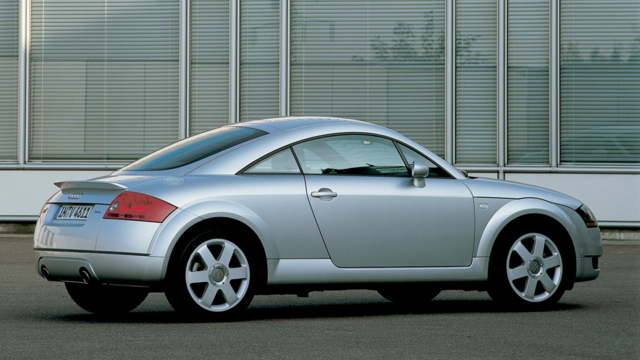
9 Audi Designs That Aged Like Fine Wine
Verdad Gallardo
2026 Audi Q5 Buyer's Guide (Every Model Explained)
Brett Foote
Ranking Every Current Audi 'S' Model From Worst to First!
Joe Kucinski
10 Best Audis That are FINALLY LEGAL to Import to the U.S.!
Joe Kucinski
Audiworld Junior Member
Joined: Oct 2009
Posts: 39
Likes: 0
From: Minneapolis, MN
Fueling nozzle issues
I have not had any issues fueling with my Q7 Tdi as yet. One must be careful when fueling at a truck stop as there are more options. You will sometimes see that #2 fuel is available in the winter and #1 fuel is available in the summer. Also, there are usually small diesel nozzles at the truck pumps or at the separate fueling island where smaller automobiles refuel.
I have read on some forums that at some stations, particularly stations in Wisconsin, a gas pump nozzle is used on the diesel line on occasion. This would definitely cause the issue described on this thread.
For those who are new to using a vehicle that requires diesel fuel, here are a couple of things to keep in mind.
While using #1 fuel in the summer will not cause any real problems, you may see a drop in MPG.
In northern climates during the winter, you will want to fuel with what some stations call a “winter blend”. This is usually a blend of #1 and #2 fuels.
If you fill with #2 fuel and drive into a region where temps are below freezing, you may find yourself stranded as the fuel gels up in the fuel line and\or fuel filter.
Just like with gasoline, not all fuel stations have quality product.
If a station provides diesel but there are fewer customers, be careful fueling in late fall and early winter as the station may not have cycled through the summer fuel before the cold weather hits.
I have driven diesels for a number of years, previously a 1996 VW Passat Tdi, and I have never had my fuel gel up. Plan ahead and pay attention to what you are putting in the tank and you should not have any problems with gelling.
I have read on some forums that at some stations, particularly stations in Wisconsin, a gas pump nozzle is used on the diesel line on occasion. This would definitely cause the issue described on this thread.
For those who are new to using a vehicle that requires diesel fuel, here are a couple of things to keep in mind.
While using #1 fuel in the summer will not cause any real problems, you may see a drop in MPG.
In northern climates during the winter, you will want to fuel with what some stations call a “winter blend”. This is usually a blend of #1 and #2 fuels.
If you fill with #2 fuel and drive into a region where temps are below freezing, you may find yourself stranded as the fuel gels up in the fuel line and\or fuel filter.
Just like with gasoline, not all fuel stations have quality product.
If a station provides diesel but there are fewer customers, be careful fueling in late fall and early winter as the station may not have cycled through the summer fuel before the cold weather hits.
I have driven diesels for a number of years, previously a 1996 VW Passat Tdi, and I have never had my fuel gel up. Plan ahead and pay attention to what you are putting in the tank and you should not have any problems with gelling.