


genstat.m

Thread Starter
Elder Member
Joined: Mar 2000
Posts: 12,893
Likes: 0
 genstat.m
% GENSTAT.M calculates the projectile range
% using a set of launch angles derived from
% random samples from a normal distribution
% Rid the screen of clutter
clc
% Display a banner
disp ( '**********************************' )
disp ( '* PROGRAM GENSTAT.M *' )
disp ( '**********************************' )
% Get the number of samples from the user
num_samples = input ( '\nEnter the number of samples: ' );
% Get the desired mean and standard deviation
desired_mean = input ( '\nEnter the mean: ' );
desired_std = input ( '\nEnter the standard deviation: ');
% Calculate the sample vector
theta0 = desired_std*randn(1, num_samples) + desired_mean;
fprintf( '\nLaunch angle samples\n' );
fprintf( ' %10.5f\n', theta0' );
% Calculate the range
fprintf ('\n\n')
V0 = input ('Enter desired launch velocity (m/s): ');
x0 = input ('Enter desired initial x-position (m): ');
z0 = input ('Enter desired initial z-position (m): ');
fprintf ( '\nCalculating range vector...\n' )
R = range0( V0, theta0, x0, z0 );
% Mean and standard deviation of R
[mean_of_R, sigma_of_R] = stats (R);
fprintf ('\nThe mean R is %10.5f (m)', mean_of_R )
fprintf ('\nThe standard deviation of R is %10.5f (m)\n\n', sigma_of_R)
% using a set of launch angles derived from
% random samples from a normal distribution
% Rid the screen of clutter
clc
% Display a banner
disp ( '**********************************' )
disp ( '* PROGRAM GENSTAT.M *' )
disp ( '**********************************' )
% Get the number of samples from the user
num_samples = input ( '\nEnter the number of samples: ' );
% Get the desired mean and standard deviation
desired_mean = input ( '\nEnter the mean: ' );
desired_std = input ( '\nEnter the standard deviation: ');
% Calculate the sample vector
theta0 = desired_std*randn(1, num_samples) + desired_mean;
fprintf( '\nLaunch angle samples\n' );
fprintf( ' %10.5f\n', theta0' );
% Calculate the range
fprintf ('\n\n')
V0 = input ('Enter desired launch velocity (m/s): ');
x0 = input ('Enter desired initial x-position (m): ');
z0 = input ('Enter desired initial z-position (m): ');
fprintf ( '\nCalculating range vector...\n' )
R = range0( V0, theta0, x0, z0 );
% Mean and standard deviation of R
[mean_of_R, sigma_of_R] = stats (R);
fprintf ('\nThe mean R is %10.5f (m)', mean_of_R )
fprintf ('\nThe standard deviation of R is %10.5f (m)\n\n', sigma_of_R)
Thread Starter
Elder Member
Joined: Mar 2000
Posts: 12,893
Likes: 0
genx.m
function x = genx (np, ns, mean, sigma)
% GENX.M generates a vector x of data values
% between mean-n*sigma and mean+n*sigm
%===========================================
% np = number of points to generate
% ns = 2*ns is the width of x in sigmas
% mean = mean of x
% sigma = standard deviation of x
%===========================================
x = [ mean-ns*sigma: 2*sigma/np: mean+ns*sigma ];
% GENX.M generates a vector x of data values
% between mean-n*sigma and mean+n*sigm
%===========================================
% np = number of points to generate
% ns = 2*ns is the width of x in sigmas
% mean = mean of x
% sigma = standard deviation of x
%===========================================
x = [ mean-ns*sigma: 2*sigma/np: mean+ns*sigma ];
Thread Starter
Elder Member
Joined: Mar 2000
Posts: 12,893
Likes: 0
hgramf.m
function hgramf (data_vector)
% Histogram-generating function
%=================================================
% bin_centers = vector containing centers of bins
% data_vector = vector of pressure measurments
% frequency = vector giving fractional number
% of measurements in each bin.
% m = number of bins in histogram
% n = number of measurements in each bin
% num_meas = number of measurements
%=================================================
% Clear the clutter
clc
% Set up m, equally-spaced histogram bins
m = input ( '\n Enter the number of equally-spaced bins: ' );
% Number in each (n) bin and bin centers
[n, bin_centers] = hist (data_vector, m);
% Set up a subplot array with
% 1 row, 2 columns, and the histogram
% in the 1st column
subplot (1, 2, 1)
% Histogram
hist (data_vector, m), xlabel ('pressure (psi)'),...
ylabel ('quantity in bin'),...
title('Pressure Measurement Histogram');
% Put the bar chart in row 1, column 2
subplot (1, 2, 2)
% Frequency distribution
num_meas = length (data_vector); % A speed-up: num_meas used twice
frequency = n/num_meas;
bar (bin_centers, frequency), xlabel ('pressure (psi)'),...
ylabel ('frequency'),...
title('Pressure Measurement Frequency Distribution');
% Display bin data
fprintf ('\n There were %3.0f measurements.\n\n', num_meas);
disp (' bin Center (psi) count frequency')
A = [ bin_centers; n; frequency ]; % You have to put them in a matrix
fprintf (' %4.3f %2.0f %6.4f\n', A)
% Histogram-generating function
%=================================================
% bin_centers = vector containing centers of bins
% data_vector = vector of pressure measurments
% frequency = vector giving fractional number
% of measurements in each bin.
% m = number of bins in histogram
% n = number of measurements in each bin
% num_meas = number of measurements
%=================================================
% Clear the clutter
clc
% Set up m, equally-spaced histogram bins
m = input ( '\n Enter the number of equally-spaced bins: ' );
% Number in each (n) bin and bin centers
[n, bin_centers] = hist (data_vector, m);
% Set up a subplot array with
% 1 row, 2 columns, and the histogram
% in the 1st column
subplot (1, 2, 1)
% Histogram
hist (data_vector, m), xlabel ('pressure (psi)'),...
ylabel ('quantity in bin'),...
title('Pressure Measurement Histogram');
% Put the bar chart in row 1, column 2
subplot (1, 2, 2)
% Frequency distribution
num_meas = length (data_vector); % A speed-up: num_meas used twice
frequency = n/num_meas;
bar (bin_centers, frequency), xlabel ('pressure (psi)'),...
ylabel ('frequency'),...
title('Pressure Measurement Frequency Distribution');
% Display bin data
fprintf ('\n There were %3.0f measurements.\n\n', num_meas);
disp (' bin Center (psi) count frequency')
A = [ bin_centers; n; frequency ]; % You have to put them in a matrix
fprintf (' %4.3f %2.0f %6.4f\n', A)
Thread Starter
Elder Member
Joined: Mar 2000
Posts: 12,893
Likes: 0
histdemo.m
% HISTDEMO.M is a Histogram-generating program
%=================================================
% bin_centers = vector containing centers of bins
% frequency = vector giving fractional number
% of measurements in each bin.
% m = number of bins in histogram
% n = number of measurements in each bin
% num_meas = number of measurements
% p_data = vector of pressure measurments
%=================================================
% Load the data
load p_data.txt
% Clear the clutter
clc
% Set up m, equally-spaced histogram bins
m = input ( '\n Enter the number of equally-spaced bins: ' );
% Number in each (n) bin and bin centers
[n, bin_centers] = hist (p_data, m);
% Set up a subplot array with
% 1 row, 2 columns, and the histogram
% in the 1st column
subplot (1, 2, 1)
% Histogram
hist (p_data, m), xlabel ('pressure (psi)'),...
ylabel ('quantity in bin'),...
title('Pressure Measurement Histogram');
% Put the bar chart in row 1, column 2
subplot (1, 2, 2)
% Frequency distribution
num_meas = length (p_data); % A speed-up: num_meas used twice
frequency = n/num_meas;
bar (bin_centers, frequency), xlabel ('pressure (psi)'),...
ylabel ('frequency'),...
title('Pressure Measurement Frequency Distribution');
% Display bin data
fprintf ('\n There were %3.0f measurements.\n\n', num_meas);
disp (' bin Center (psi) count frequency')
A = [ bin_centers; n; frequency ]; % You have to put them in a matrix
fprintf (' %4.3f %2.0f %6.4f\n', A)
%=================================================
% bin_centers = vector containing centers of bins
% frequency = vector giving fractional number
% of measurements in each bin.
% m = number of bins in histogram
% n = number of measurements in each bin
% num_meas = number of measurements
% p_data = vector of pressure measurments
%=================================================
% Load the data
load p_data.txt
% Clear the clutter
clc
% Set up m, equally-spaced histogram bins
m = input ( '\n Enter the number of equally-spaced bins: ' );
% Number in each (n) bin and bin centers
[n, bin_centers] = hist (p_data, m);
% Set up a subplot array with
% 1 row, 2 columns, and the histogram
% in the 1st column
subplot (1, 2, 1)
% Histogram
hist (p_data, m), xlabel ('pressure (psi)'),...
ylabel ('quantity in bin'),...
title('Pressure Measurement Histogram');
% Put the bar chart in row 1, column 2
subplot (1, 2, 2)
% Frequency distribution
num_meas = length (p_data); % A speed-up: num_meas used twice
frequency = n/num_meas;
bar (bin_centers, frequency), xlabel ('pressure (psi)'),...
ylabel ('frequency'),...
title('Pressure Measurement Frequency Distribution');
% Display bin data
fprintf ('\n There were %3.0f measurements.\n\n', num_meas);
disp (' bin Center (psi) count frequency')
A = [ bin_centers; n; frequency ]; % You have to put them in a matrix
fprintf (' %4.3f %2.0f %6.4f\n', A)
Thread Starter
Elder Member
Joined: Mar 2000
Posts: 12,893
Likes: 0
histdemo2.m
% HISTDEMO.M is a Histogram-generating program
%=================================================
% bin_centers = vector containing centers of bins
% frequency = vector giving fractional number
% of measurements in each bin.
% m = number of bins in histogram
% n = number of measurements in each bin
% num_meas = number of measurements
% p_data = vector of pressure measurments
%=================================================
% Load the data
load p_data.txt
% Clear the clutter
clc
% Set up m, equally-spaced histogram bins
m = input ( '\n Enter the number of equally-spaced bins: ' );
% Number in each (n) bin and bin centers
[n, bin_centers] = hist (p_data, m);
% Set up a subplot array with
% 1 row, 2 columns, and the histogram
% in the 1st column
%subplot (1, 2, 1)
% Histogram
%hist (p_data, m), xlabel ('pressure (psi)'),...
% ylabel ('quantity in bin'),...
% title('Pressure Measurement Histogram');
% Put the bar chart in row 1, column 2
%subplot (1, 2, 2)
% Frequency distribution
measurements = length (p_data); % A speed-up: num_meas used twice
frequency = n/measurements;
bar (bin_centers, frequency), xlabel ('pressure (psi)'),...
ylabel ('frequency'),...
title('Pressure Measurement Frequency Distribution');
% Display bin data
fprintf ('\n There were %3.0f measurements.\n\n', measurements);
disp (' bin Center (psi) count frequency')
A = [ bin_centers; n; frequency ]; % You have to put them in a matrix
fprintf (' %4.3f %2.0f %6.4f\n', A)
%=================================================
% bin_centers = vector containing centers of bins
% frequency = vector giving fractional number
% of measurements in each bin.
% m = number of bins in histogram
% n = number of measurements in each bin
% num_meas = number of measurements
% p_data = vector of pressure measurments
%=================================================
% Load the data
load p_data.txt
% Clear the clutter
clc
% Set up m, equally-spaced histogram bins
m = input ( '\n Enter the number of equally-spaced bins: ' );
% Number in each (n) bin and bin centers
[n, bin_centers] = hist (p_data, m);
% Set up a subplot array with
% 1 row, 2 columns, and the histogram
% in the 1st column
%subplot (1, 2, 1)
% Histogram
%hist (p_data, m), xlabel ('pressure (psi)'),...
% ylabel ('quantity in bin'),...
% title('Pressure Measurement Histogram');
% Put the bar chart in row 1, column 2
%subplot (1, 2, 2)
% Frequency distribution
measurements = length (p_data); % A speed-up: num_meas used twice
frequency = n/measurements;
bar (bin_centers, frequency), xlabel ('pressure (psi)'),...
ylabel ('frequency'),...
title('Pressure Measurement Frequency Distribution');
% Display bin data
fprintf ('\n There were %3.0f measurements.\n\n', measurements);
disp (' bin Center (psi) count frequency')
A = [ bin_centers; n; frequency ]; % You have to put them in a matrix
fprintf (' %4.3f %2.0f %6.4f\n', A)
Thread Starter
Elder Member
Joined: Mar 2000
Posts: 12,893
Likes: 0
normpdf.m
function p = normpdf ( x, mean, sigma )
% NORMPDF.M calculates and plots a
% normal probability density function.
%===============================================
% mean = mean of the data vector, x
% sigma = standard deviation of data vector, x
% x = data vector over which to find p(x)
% p(x) = probability density function
%===============================================
normalizer = 1/(sigma*sqrt(2*pi));
p = normalizer*exp( -0.5*( (x - mean)/sigma ).^2 );
% NORMPDF.M calculates and plots a
% normal probability density function.
%===============================================
% mean = mean of the data vector, x
% sigma = standard deviation of data vector, x
% x = data vector over which to find p(x)
% p(x) = probability density function
%===============================================
normalizer = 1/(sigma*sqrt(2*pi));
p = normalizer*exp( -0.5*( (x - mean)/sigma ).^2 );
Thread Starter
Elder Member
Joined: Mar 2000
Posts: 12,893
Likes: 0
p_data38.txt
4.95
4.87
5.1
4.99
5.06
5.09
4.95
5.01
4.98
4.99
5.0
5.05
5.0
5.02
5.01
5.06
4.99
5.01
4.98
4.97
4.92
4.93
5.00
4.98
4.92
4.91
5.06
5.01
4.98
4.97
5.02
4.92
4.94
4.98
4.99
4.92
5.04
5.00
4.87
5.1
4.99
5.06
5.09
4.95
5.01
4.98
4.99
5.0
5.05
5.0
5.02
5.01
5.06
4.99
5.01
4.98
4.97
4.92
4.93
5.00
4.98
4.92
4.91
5.06
5.01
4.98
4.97
5.02
4.92
4.94
4.98
4.99
4.92
5.04
5.00
Trending Topics
Thread Starter
Elder Member
Joined: Mar 2000
Posts: 12,893
Likes: 0
range0.m
function R = range0( V0, theta0, x0, z0 )
% RANG0.M calculates the range given launch
% conditions and no drag.
%==========================================
% Variable definitions
% theta0 = launch angle (degrees)
% V0 = launch velocity (m/s)
% x0 = launch x-coordinate (m)
% z0 = launch z-coordinate (m)
%==========================================
% Specify constants
g = 9.807; % m/s^2
% Calculate Vx0, Vz0 (m/s)
theta0r = theta0*pi./180;
Vx0 = V0*cos( theta0r );
Vz0 = V0*sin( theta0r );
% Find the time of flight (s)
for j = 1:length(theta0)
c = [ -.5*g Vz0(j) z0 ];
the_roots_of_c = roots(c);
if the_roots_of_c(1) > 0
time_of_flight(j) = the_roots_of_c(1);
else
time_of_flight(j) = the_roots_of_c(2);
end
end
% Calculate the range
R = Vx0.*time_of_flight;
% RANG0.M calculates the range given launch
% conditions and no drag.
%==========================================
% Variable definitions
% theta0 = launch angle (degrees)
% V0 = launch velocity (m/s)
% x0 = launch x-coordinate (m)
% z0 = launch z-coordinate (m)
%==========================================
% Specify constants
g = 9.807; % m/s^2
% Calculate Vx0, Vz0 (m/s)
theta0r = theta0*pi./180;
Vx0 = V0*cos( theta0r );
Vz0 = V0*sin( theta0r );
% Find the time of flight (s)
for j = 1:length(theta0)
c = [ -.5*g Vz0(j) z0 ];
the_roots_of_c = roots(c);
if the_roots_of_c(1) > 0
time_of_flight(j) = the_roots_of_c(1);
else
time_of_flight(j) = the_roots_of_c(2);
end
end
% Calculate the range
R = Vx0.*time_of_flight;
AudiWorld Stories
Bringing Audi to Life for Audi Fans

10 Strangest Audi Designs That Actually Made Production
Joe Kucinski
2027 Audi Q7 and SQ7: Audi Upgraded EVERYTHING!
Michael S. Palmer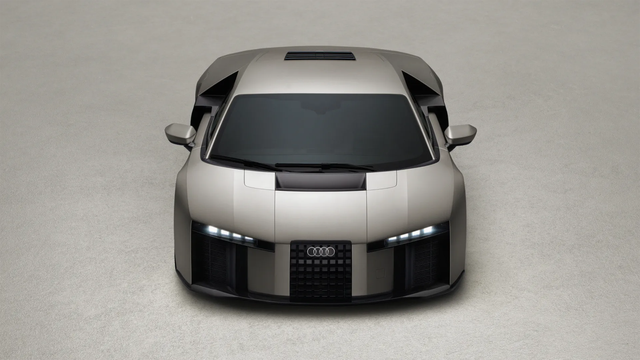
Audi Unveils Absurdly Cool New Supercar: 10 Things You Need to Know!
Verdad Gallardo
The Highs & Lows of Every Audi C-Class Generation
Joe Kucinski
Top 10 Most Expensive Audis Ever Sold on Bring-A-Trailer
Brett Foote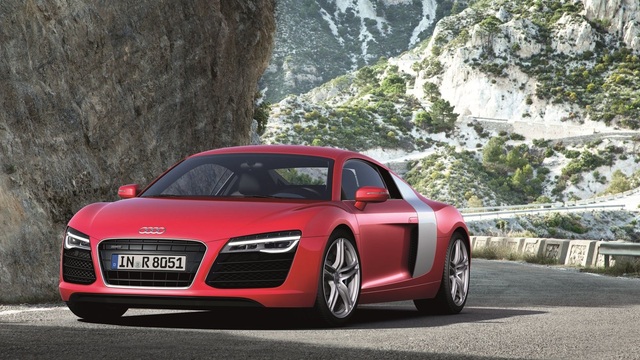
10 Audi Features & Options We Miss the Most!
Joe Kucinski
Audi Recreates Crazy-Looking Speed Record Breaker From 1935
Verdad Gallardo
Coachbuilder Recreates the 1995 Audi TTS Concept
Verdad Gallardo
Every Audi V10 Car Ranked!
Joe Kucinski
Thread Starter
Elder Member
Joined: Mar 2000
Posts: 12,893
Likes: 0
stats.m
function [ mean, std_dev ] = stats ( x )
% STATS.M computes the mean and standard deviation
% of a vector of data.
%=========================================
% Variable definitions
% lengthx = the number of entries in x
% mean = the average of x
% std_dev = the standard deviation of x
% x = a vector containing sample
% of x
%=========================================
% Find the length of sample x
lengthx = length(x);
% Find the mean of the lengthx samples
mean = sum(x)/lengthx;
% Find the standard deviation of the samples
std_dev = sum( ( mean - x ).^2 )/(lengthx - 1 );
% STATS.M computes the mean and standard deviation
% of a vector of data.
%=========================================
% Variable definitions
% lengthx = the number of entries in x
% mean = the average of x
% std_dev = the standard deviation of x
% x = a vector containing sample
% of x
%=========================================
% Find the length of sample x
lengthx = length(x);
% Find the mean of the lengthx samples
mean = sum(x)/lengthx;
% Find the standard deviation of the samples
std_dev = sum( ( mean - x ).^2 )/(lengthx - 1 );