the 1.8 engine

Guest
Posts: n/a
 the 1.8 engine
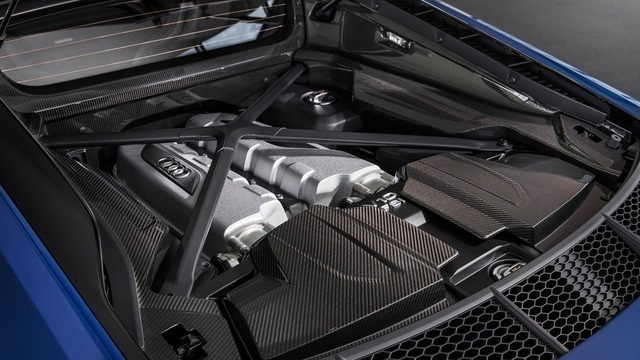
Just a technical question.... I see lots of upgrades for the turbo system on the 1.8 motor. Turbos, manifolds, intercoolers, piping...etc. What i don't understand is why there is no talk of any internal engine upgrades....such as camshaftsn pistons, or even headwork. Can someone explain to me the reason why these parts are almost nonexistent as far as upgrade options are concerned. Is the 1.8 so dynamically perfect that no one has tried to really tear into it? Does anyone make cams for this engine and i just don't know about it? Cuz if no one does, and if it is possible, i will work on a more aggressive cam profile for the engine. <br> Also, is the head made of a composite material that is hard to port and polish? I have heard such rumors, do the hold true????<br>Thanks for your help,<br>KAZ
Guest
Posts: n/a
APR / Vortrag working on 400hp 2.0 liter version
APR was able to get 300 hp without doing any internal work, and they may get more as they fine tune their system. It just doesn't make sense to open up the engine with those kinds of results. There is plenty of room for improvement with porting, etc. but it is only worthwhile if you are going for serious power - like a race engine. When you can up it from 150 to 200+hp with a computer chip, why get involved with even just cams?<p>It will cost you at least $400 in parts to remove and reinstall the head, any port work or labor charges are on top of that. Even if you removed the head yourself, it would be at least $1200 to get the head properly ported with a flow bench and reinstalled, probably more. Cams would run you almost as much, $800-1200 for the cams and $50 in gaskets, etc. If you get aggressive with the cams then you will have to replace the valve springs, probably $200-300. You will also need to reprogram the computer, or it will run a bit strange.<p>Todd W
Guest
Posts: n/a
Re: APR / Vortrag working on 400hp 2.0 liter version
thanks for your answer. From the many Audi guys i have talked to, it seems that anything above the KO4 conversion and they run into problems with the fine tuning. Cams only cost that much now, if people were willing to do the cams and the port and polish, prices would go down, and the engine would run smoother and be even more bullet proof. For arguments sake, if someone were to develope a set of cams for 500-600 dollars, higher lift higher duration cams with no overlap (and therefore a smooth idle) and a 20-25 horsepower increase, would people be up for that? It seems to me that a 350 hp motor built with stock internals would not last very long....correct me if i am wrong, i am by no means an expert on turbo systems. However, lets face it, a 350 hp (even a 270 hp) 1.8 with stock internals would have practically maniacle characteristics, and the longevity of the engine would surely decrease. I honestly don't think that that kind of power on a stock motor would result in a reliable, durable, long lasting motor with streetable qualities. <br>by the way, i would really like to start a thread about this....i don't think the vast amount of knowledge on this list can be fully appreciated if only two people speak up. COme on people, speak your minds and enlighten me! Thanks again.<br>KAZ
Guest
Posts: n/a
Character of 350 ps 1.8T
I have driven a 350 ps 1.8T street car in Europe, with no problems in normal driving (other than keeping from hitting the boost every chance I got). Although is has the same or more torque down low, it can feel "soft" compared to the stock version, only because it has so much more further up the rev range.
Guest
Posts: n/a
Longevity of a 300 hp conversion
I believe that a 300hp conversion with stock internals is not an unrealistic proposition.<p>When modifying a normally aspirated engine to use a supercharger (mechanical or turbo) typically there is a limit in boost (like the PES at 5lbs) without tearing into the engine. The reason typically is to lower the compression ratio so it will live with pump gas.<p>As for our 1.8T engines, they seem to have a very efficient and small combustion chamber. The centrally mounted spark plug with a compact chamber make for good flame travel across a very small combustion chamber, so you don't need as much spark advance. Less advance=less heat buildup in the piston crown and valves, = less detonation.<p>In contrast, try lighting a 4 3/8" chamber from one side (460 ford & derivatives) 35 degrees advance (mechanical & vacuum) at the power peak was common in the engines I used to build.<p>Because the 1.8l engine can be mapped thoroughly for spark and fuel delivery, you can richen the mixture or pull spark lead to avoid detonation, and the knock sensor can help when detonation becomes a problem in the field. none of this was available even 10 years ago with Kjectronic or Kugelfischer injection, much less us poor saps with Holley carbs and vacuum advance distrubitors.<p>As far as the mechanicals themselves go, a plain bearing is pretty much a plain bearing. I am sure you could go into the oiling system and bore it all out if oiling was a problem (like Porsche 944s) but so far I haven't heard much of this.<p>Cams & porting are less of an issue when you are forcing in the air, but I supppose there is room for improvement if you want to go over 300 hp. <p>Heat is the problem. it seems to be what destroys the KKK turbos (ko3 and ko4) when pushed. By designing a suitable exhaust manifold (as APR has done) and mating it with an adequate turbo, I think there is room for more. As long as the fuel delivery is up to snuff (stock injectors <240 hp, APRs >300) and you don't resort to kludges like a rising rate fuel regulator to make up for wimpy injectors that lack the flow rate (more than adequate for 150 hp stockers, or 190 hp chipped motors) for the power you want to develop, I don't see the problem.<p>Sure, blueprinting the block or shot peening the rods sounds racy, but I think production engines of today are much better than the production racing engines of yore. These are not magic parts made of unobtanium, but the little advanceseach year or two all add up eventually.<p>Remember, BMW and Renault used to get 1,000 hp for qualifying out of 1.5l. 650 or more was routine for racing. Granted, these were full-on special purpose racing motors that idled at 4,000 revs. But there is much to be learned from them, and until I see/hear a lot of bottom end failures, I am not worried too much about longevity.<p>Remember also that we are talking 1 bar of boost for most of this stuff, which is rarely seen on the street, but could be seen a lot at the track. Track time will always reduce the longevity of any engine, the question is how much.<p>THe ur Quattro and its ilk lived on steady diets of 21psi and more, and there are thousands of them still on the road many with 100k or even 200k on the factory motor & turbo, with '70s technology (like the kkk 03/04 series).<p>I think those that want a quickie upgrade (new turbo only, a few cheap kludges) will find they are driving grenades. Not so a really engineered product where some thought & money has gone into it. There are tuners out there who have lots of dyno time and have spent considerable time & money making sure drivability is there. Some folks get as far as saying "this bolts on, lets use it" You get what you pay for. You can weld together a part that looks pretty, but doesn't do anything, or you can CAD design and machine one that does. You can pay $150 and get some registers remapped, or $400 and get all that matter remapped. Pay your money and choose wisely.<p>Just my $.02, take it for what it is worth. <br>
Guest
Posts: n/a
Audi engineers say 300 hp for 1.8T (long)
Well, in the TT at least. A single cam for an Audi 10VT engine is $600, why would two cams for an A4 be less? You can get that much HP from changing the exhaust, something people are much more interested in than true engine work. A chip or exhaust is psychologically easier to install, and to undo when you sell the car. There is a certain threshold with cams where it becomes a serious endeavour instead of just weekend modification projects. Cams are also much more expensive to develop. Then there is the warranty issue.<p>I have ridden in Audi cars with tuned 20VT 2.2 liter engines, a derivative of the 1.8. These engines were 230hp from the factory, and produced about 450hp without any internal modifications. One car I rode in had 450K miles, much of that with the modified engine so they are very reliable when done right. Expect to get 80-90% of regular engine life on a modified car, 90% for 150% of stock power output and 75-80% for 200% of stock power output. I would still expect at least 150-200K miles out of the engine if not abused.<p>I found it to be a very driveable car, it was just like extending the throttle pedal twice as far. There was zero effect on low throttle driving around town, but immense amounts of very smooth power if you booted it. There was more lag, but still less than many factory turbo systems on other cars.<p>Pressure from a turbo or supercharger adds little stress to the internals of a piston engine. A 50% increase in power means a 10-20% increase in the maximum cylinder pressure. Running over redline by 500rpm is harder on the engine than 7 more psi of boost. That's why diesels are so good for turbocharging. <p>The problems are fuel mixture and charge temperature. A good combustion chamber design, like the Audi 4 valve and 5 valve engines, resists pinging well. Those 5 cyl engine I mentioned above were running over 30psi of boost. You need a very good IC and lots of fuel flow for that.<p>Outside the engine, the heat and pressure are very hard on the EM. The psi on the cold side of the turbo is roughly doubled on the hot side. Your engine may see 15 psi, which means 20 or more psi at the turbo because of the IC, piping, and throttle body. Therefore a minimum of 40psi in the EM at over 1000 degrees farenheit. When you close the throttle there is a pressure wave at 20-30psi that travels back to the turbo and destabilizes it while spinning at 100k rpm. The surge also blows out rubber intake hoses, or just pops them off. Silicone hoses are the worst because they slide right off.<p>Todd W<p>p.s. Ford once made a 2.3 liter Pinto engine (used in Mustang SVO and Turbocoupe) produce the exact torque curve of a big-block V8. It had sequential twin turbochargers with a blend gate. Reporters who drove it said that they thought it was a standard Crown Vic until the tech opened the hood.

Thread
Thread Starter
Forum
Replies
Last Post
Suffolk
Audi 4000 / Coupe GT Discussion
13
Jun 5, 2008 03:35 PM
e
A4 (B5 Platform) Discussion
1
Oct 22, 2000 04:35 PM