


Center differential being replaced....finally

Thread Starter
AudiWorld Senior Member
Joined: Nov 2002
Posts: 789
Likes: 4
 Center differential being replaced....finally
2006 A8L
61,000 mi.
Brought my 2006 A8L to the dealer last Monday (been in there over a week). My car was making a weird vibration on 90 degree+ turns upon acceleration from a standstill. The dealership said they could not replicate the noise/vibration, so I went in and took the service advisor for a quick drive (me driving) in the parking lot. He definitely felt it and proceeded to bring out the mechanic/tech to listen.
I received a call yesterday about a discussion they had with AoA on the diagnosis and was told they were going to replace all of the differential fluid with some different type of fluid that they've had some success with. After adding the fluid the sound/vibration was still there (perhaps even worse). They have now decided to replace the entire central differential.
It seems that this problem is intermittent, which is why it took so long to diagnose. I thought this post might be helpful for anyone else experiencing the same problem.
Enjoy!
61,000 mi.
Brought my 2006 A8L to the dealer last Monday (been in there over a week). My car was making a weird vibration on 90 degree+ turns upon acceleration from a standstill. The dealership said they could not replicate the noise/vibration, so I went in and took the service advisor for a quick drive (me driving) in the parking lot. He definitely felt it and proceeded to bring out the mechanic/tech to listen.
I received a call yesterday about a discussion they had with AoA on the diagnosis and was told they were going to replace all of the differential fluid with some different type of fluid that they've had some success with. After adding the fluid the sound/vibration was still there (perhaps even worse). They have now decided to replace the entire central differential.
It seems that this problem is intermittent, which is why it took so long to diagnose. I thought this post might be helpful for anyone else experiencing the same problem.
Enjoy!

AudiWorld Senior Member


Joined: Jul 2001
Posts: 1,937
Likes: 42
From: Kansas City
that vibration is the scrubbing of the tires. For the first several mph from a stand still stop the differentials are locked-up in case conditions call for maximum traction to get underway. If you take off in a strait line you do not notice the lock-up, however, if you turn a 90 degree corner as you start off you experience the shudder . That's because the outer wheel can not turn faster than the inner wheel and you get the same tire scrub an old 4X4 pick up does when the hubs have been locked.
I am shocked the techs did not understand how the Audi system works.
I am shocked the techs did not understand how the Audi system works.
Thread Starter
AudiWorld Senior Member
Joined: Nov 2002
Posts: 789
Likes: 4
Normally I'd agree w/ you.....
However, my car never made this noise up until a year ago and we drove in a different '06 on the lot and it did not make the noise either. Worst case I guess is that I'll have a new differential w/ the same problem. I think if you heard/felt the vibration you would agree that it is not just the tires scrubbing.
AudiWorld Member
Joined: Mar 2010
Posts: 461
Likes: 1
From: NW Indiana
The answer will be more than likely a big No! I too almost went to the Dealership for this, but after a Conversation with Indy Tech and Posting this Thread, I then understood what it was about. I'm shock that the Audi Tech are going even touch something that is So Audi Related and risk it never being the same or worse. Enjoy and laters,
Good Vibrations
Good Vibrations

AudiWorld Super User

Joined: Nov 2010
Posts: 6,831
Likes: 27
From: Vancouver, Canada
I don't know how bed it was, but mine is doing the same. Probably quite a bit less. It seems it is usual for Quatro, which doesn't mean it is OK. That vibration is coming from central differential and drive shaft combined in an resonant elastic couple. Differential is Torsen type and it creates high friction between gears, preventing big differences in rotations of front and rear axle. That friction becomes a bit jumpy with gear ware. Drive shaft has unfortunate elasticity and comes in resonance amplifying vibrations so we can feel and hear them. That also hurts gears more and more. With new differential it will be gone, but it will come back in time.
Trending Topics
AudiWorld Super User
Joined: May 2003
Posts: 2,729
Likes: 6
Differential
hard to tell how bad it is by the descriptions.
there's a problem with strong vibrations on the A8 and A6 4.2 coming from the rear differential pinion shaft bearings and spacer/adjuster.
183-525-261
183-525-267
087-407-551-a
the spacer shrinks over time allowing excessive play in the bearings and causing that strong vibrations on tight turns.
there's a problem with strong vibrations on the A8 and A6 4.2 coming from the rear differential pinion shaft bearings and spacer/adjuster.
183-525-261
183-525-267
087-407-551-a
the spacer shrinks over time allowing excessive play in the bearings and causing that strong vibrations on tight turns.
AudiWorld Stories
Bringing Audi to Life for Audi Fans

Top 10 Most Expensive Audis Ever Sold on Bring-A-Trailer
Brett Foote
10 Audi Features & Options We Miss the Most!
Joe Kucinski
Audi Recreates Crazy-Looking Speed Record Breaker From 1935
Verdad Gallardo
Coachbuilder Recreates the 1995 Audi TTS Concept
Verdad Gallardo
Every Audi V10 Car Ranked!
Joe Kucinski
9 Audi Designs That Aged Like Fine Wine
Verdad Gallardo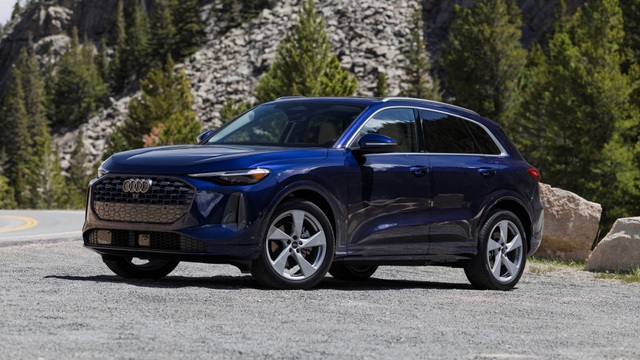
2026 Audi Q5 Buyer's Guide (Every Model Explained)
Brett Foote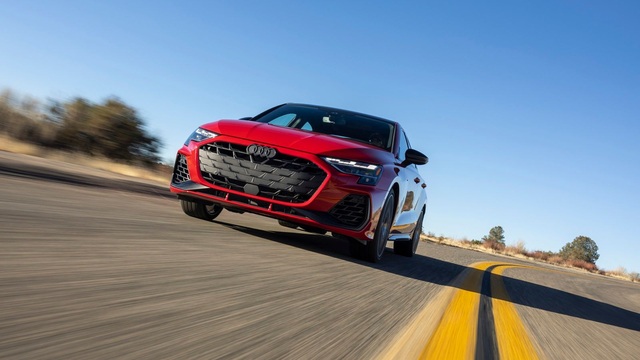
Ranking Every Current Audi 'S' Model From Worst to First!
Joe Kucinski
10 Best Audis That are FINALLY LEGAL to Import to the U.S.!
Joe Kucinski
AudiWorld Super User
Joined: Aug 2002
Posts: 4,918
Likes: 7
From: Warwickshire
I have to say, you do not seem to either!
The diffs never lock in any way shape or form and there is means of locking them. The front and rear are free, open completely normal diffs while the centre is torque dependant in as much as it relies upon the worm and gear principle which allows limited rotation in some situations. Pulling away from standstill on firm ground is not one of them.
The vibration is caused by backlash in the whole drivetrain excentuated by the accerman effect of turning a tight radius. The centre diff shifts from directing drive to the front and rear because at low speeds it is not good at seeking out lost traction. It 'sees' the speed difference as a potential loss of traction at front because in a tight turn the front diff will rotate faster, so it switches torque to the rear, then it tries directing torque back to the front and continues this shifting pattern until something else changes - either you come of the turn or speed up.
A new car will do it but it is more obvious in a higher milage car with more wear in the drive components. As far as I can see, it nothing to worry about and unless you replace every component in the whole drive train, it is not possible to eradicate it.
The diffs never lock in any way shape or form and there is means of locking them. The front and rear are free, open completely normal diffs while the centre is torque dependant in as much as it relies upon the worm and gear principle which allows limited rotation in some situations. Pulling away from standstill on firm ground is not one of them.
The vibration is caused by backlash in the whole drivetrain excentuated by the accerman effect of turning a tight radius. The centre diff shifts from directing drive to the front and rear because at low speeds it is not good at seeking out lost traction. It 'sees' the speed difference as a potential loss of traction at front because in a tight turn the front diff will rotate faster, so it switches torque to the rear, then it tries directing torque back to the front and continues this shifting pattern until something else changes - either you come of the turn or speed up.
A new car will do it but it is more obvious in a higher milage car with more wear in the drive components. As far as I can see, it nothing to worry about and unless you replace every component in the whole drive train, it is not possible to eradicate it.