



New Rotors/Pads 15K ago- now vibration when braking?

Thread Starter
New Member
Joined: Mar 2002
Posts: 367
Likes: 0
 New Rotors/Pads 15K ago- now vibration when braking?
I put new Rotors and Pads on 15K and 1.5 yrs ago. ( Did it through very recommended and reputable shop. ) They've squeaked since day one, perhaps the Jurid pads. But recently I've noticed a strong vibration when you brake from higher speeds, especially on the freeway. I've also begun noticing the grab/vibrate at low speeds as well.
Should the rotors be warped already? What would cause this?
Should the rotors be warped already? What would cause this?

AudiWorld Senior Member
Joined: Jul 2002
Posts: 762
Likes: 0
Read this from Stoptech
Similar comments have been posted from the guys at Matrix, Zeckhausen, etc. but this article is easier to find.<ul><li><a href="http://www.stoptech.com/tech_info/wp_warped_brakedisk.shtml">The "Warped" Brake Disc and Other Myths of the Braking System</a></li></ul>
![EBG 18T [Eric]'s Avatar](data:image/svg+xml;utf8,<svg xmlns='http://www.w3.org/2000/svg' viewBox='0 0 50 50'><circle class='avatar-circle-default' fill='%235690e5' cx='25px' cy='25px' r='20px'></circle><text class='avatar-text-default' x='49%' y='53%' fill='white' text-anchor='middle' alignment-baseline='middle'>E</text></svg>)
AudiWorld Super User
Joined: Mar 2005
Posts: 3,245
Likes: 0
I used Hawk Blue's to clean my stoptech rotors. crude, but works.
a short drive and a couple stops w/ cold hawk blues will shave off any old brake material on the rotors. It works great. I now put the hawk blues in for a short drive before i swap and re-bed any new pads.
perfect for swaping between my street and track pads. Shortens the rotor life, but oh well. :-)
perfect for swaping between my street and track pads. Shortens the rotor life, but oh well. :-)

AudiWorld Super User
Joined: Jan 2003
Posts: 2,644
Likes: 0
From: Fort Lauderdale, Florida
Stop vibration and squeal for (almost) $0
This procedure requires time and just a few simple tools.
I use a spare set of lug bolts and a couple wheel spacers to temporarily clamp the rotor to the hub while measuring runout.
I use a Whiteout marker pen to mark the rotor and hub. When starting, I number each lugbolt hole (from 1 thru 5) on the rotor hat, and mark the spot that happens to be adjacent to lugbolt hole 1 on the hub with a thick line.
It's simple and effective. But it does take time.<ul><li><a href="https://forums.audiworld.com/v8/msgs/75169.phtml">https://forums.audiworld.com/v8/msgs/75169.phtml</a</li></ul>
I use a spare set of lug bolts and a couple wheel spacers to temporarily clamp the rotor to the hub while measuring runout.
I use a Whiteout marker pen to mark the rotor and hub. When starting, I number each lugbolt hole (from 1 thru 5) on the rotor hat, and mark the spot that happens to be adjacent to lugbolt hole 1 on the hub with a thick line.
It's simple and effective. But it does take time.<ul><li><a href="https://forums.audiworld.com/v8/msgs/75169.phtml">https://forums.audiworld.com/v8/msgs/75169.phtml</a</li></ul>
AudiWorld Super User
Joined: Jan 2003
Posts: 2,644
Likes: 0
From: Fort Lauderdale, Florida
Re: New Rotors/Pads 15K ago- now vibration when braking?
<ul><li><a href="https://forums.audiworld.com/v8/msgs/107350.phtml">https://forums.audiworld.com/v8/msgs/107350.phtml</a</li></ul>
Trending Topics

AudiWorld Super User


Joined: Dec 2003
Posts: 2,244
Likes: 3
From: Gardnerville, NV
And I thought that I was the only one to have matched rotors for min. runout! Some further comment..
and suggestions.
1. Before removing a rotor from its hub mark their relative orientation. I use permanent center punch marks. Clean and lightly grease the interface surfaces to prevent water intrusion.
2. This technique Is justified for gross rotor runout conditions. Any rotor within the factory runout tolerance of 0.002TIR will wear true before the next pad change. Why rotors must always be mated to their hubs for life.
3. Old rotors are superior to new because rotors tend to wear true and the unworn annular rings either side of the active surfaces form an effective 4 wheel, 8 surface passive wear sensing system. Minimum thickness specs are a mfg. CYA, designed to sell rotor replacements.
4. That said, IME most brake squeal is not a result of excessive rotor runout but by insufficient caliper piston retraction. The result of an improperly maintained, sludged up hydraulic system, requiring caliper overhaul. Also a zero cost but dirty DIY process, inasmuch as all rubber parts are reusable.
1. Before removing a rotor from its hub mark their relative orientation. I use permanent center punch marks. Clean and lightly grease the interface surfaces to prevent water intrusion.
2. This technique Is justified for gross rotor runout conditions. Any rotor within the factory runout tolerance of 0.002TIR will wear true before the next pad change. Why rotors must always be mated to their hubs for life.
3. Old rotors are superior to new because rotors tend to wear true and the unworn annular rings either side of the active surfaces form an effective 4 wheel, 8 surface passive wear sensing system. Minimum thickness specs are a mfg. CYA, designed to sell rotor replacements.
4. That said, IME most brake squeal is not a result of excessive rotor runout but by insufficient caliper piston retraction. The result of an improperly maintained, sludged up hydraulic system, requiring caliper overhaul. Also a zero cost but dirty DIY process, inasmuch as all rubber parts are reusable.
AudiWorld Stories
Bringing Audi to Life for Audi Fans

Top 10 Most Expensive Audis Ever Sold on Bring-A-Trailer
Brett Foote
10 Audi Features & Options We Miss the Most!
Joe Kucinski
Audi Recreates Crazy-Looking Speed Record Breaker From 1935
Verdad Gallardo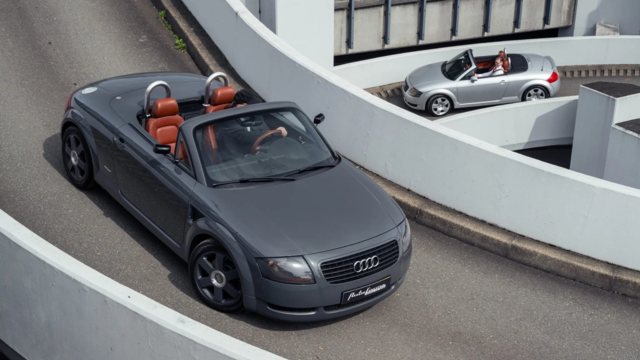
Coachbuilder Recreates the 1995 Audi TTS Concept
Verdad Gallardo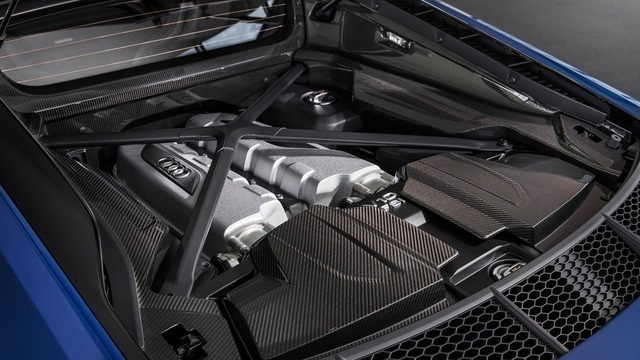
Every Audi V10 Car Ranked!
Joe Kucinski
9 Audi Designs That Aged Like Fine Wine
Verdad Gallardo
2026 Audi Q5 Buyer's Guide (Every Model Explained)
Brett Foote
Ranking Every Current Audi 'S' Model From Worst to First!
Joe Kucinski
10 Best Audis That are FINALLY LEGAL to Import to the U.S.!
Joe Kucinski
Thread
Thread Starter
Forum
Replies
Last Post
CVT Ben Hogan
A4 (B6 Platform) Discussion
12
Oct 14, 2007 09:12 PM
Ben the Ben
S4 / RS4 (B5 Platform) Discussion
5
Apr 14, 2006 08:11 PM
beerguy
Audi 100 / A6 (C4 Platform)
4
Aug 7, 2003 09:12 PM


