


Any suggestions for disabling ABS system

Thread Starter
AudiWorld Senior Member

Joined: Mar 2000
Posts: 942
Likes: 0
From: Cleveland, OH
 Any suggestions for disabling ABS system
My old 1988 5000Tq had a nice big button on the dash to disable the ABS brakes. It was great to have the option especially when the roads were snowy. My S4, even with snow tires, seems a little too sensitive by activating the ABS system at even the slightest hint of lock-up, even at low speeds. Any suggestions for a quick on/off disable? VAG? I was thinking of pulling the fuse but I think the ABS warning buzzer goes nuts if it's removed. Any suggestions? Again this would be done only when conditions warrant better braking with ABS off, i.e. snowy roads. Would be nice to have ABS defeated at speeds under 25 mph in my opinion. Thoughts?

Member
Joined: Jan 2001
Posts: 6,196
Likes: 0
Not a simple on/off switch task. Sorry if this response is a little lengthy.
I went through this on my last S4 and it did require yanking the fuse and listening to the systems complain (at length) when the car was started up and tolerating the dash lights the whole time I drove it like that. The ABS system can be disconnected via a plug at the ABS unit itself, but you must make certain to cover the electrical bus connector ends to avoid contamination while the unit is disengaged. That would be especially true under the conditions you describe.
I did this on a track under fairly controlled conditions, but would not recommend it for general use. You are correct to want to disengage the system for winter/ice driving if you know what you are doing and would have much greater control with it off, but unlike the switch of days gone by, disengaging the system now has many side effects as it is part of of the ESP system as well.
Additionally, what I experienced when I pulled the fuse on my old B5 S4 was the impact of additional circuits that shared that electrical feed like the "rough road" throttle adjustment. This circuit was part of a system that monitored road conditions looking for rough surfaces and made the throttle sensitivity quite numb to compensate so you wouldn't end up jerking your car with unintended throttle inputs.
I found it to be a serious tradeoff given that I wanted ABS off with *more* thottle sensitivity for the type of driving I had in mind. Your circumstance would benefit from a high degree of throttle sensitivity as well. I can't say for sure that these systems share a common fuse in the B6 series cars, so this may or may not be applicable.
Sadly too many systems are far too intertwined these days to allow us the simplicity of days gone by.....
I did this on a track under fairly controlled conditions, but would not recommend it for general use. You are correct to want to disengage the system for winter/ice driving if you know what you are doing and would have much greater control with it off, but unlike the switch of days gone by, disengaging the system now has many side effects as it is part of of the ESP system as well.
Additionally, what I experienced when I pulled the fuse on my old B5 S4 was the impact of additional circuits that shared that electrical feed like the "rough road" throttle adjustment. This circuit was part of a system that monitored road conditions looking for rough surfaces and made the throttle sensitivity quite numb to compensate so you wouldn't end up jerking your car with unintended throttle inputs.
I found it to be a serious tradeoff given that I wanted ABS off with *more* thottle sensitivity for the type of driving I had in mind. Your circumstance would benefit from a high degree of throttle sensitivity as well. I can't say for sure that these systems share a common fuse in the B6 series cars, so this may or may not be applicable.
Sadly too many systems are far too intertwined these days to allow us the simplicity of days gone by.....
Thread Starter
AudiWorld Senior Member
Joined: Mar 2000
Posts: 942
Likes: 0
From: Cleveland, OH
Not at 10mph in snow on a decline...sorry
It is a known fact that cars stop in shorter distances without ABS and all other things being equal on snow covered roads. Please don't call it stupid if I'm able to stop a few feet shorter to avoid a car in front of me.
Member
Joined: Jan 2001
Posts: 6,196
Likes: 0
True for ESP in overall handling in snow/ice, but not for stopping in snow pack conditions.
ABS is better than locking the brakes, but not better than slow pulsing via the brake pedal. Go to a winter driving clinic (like Audi's Steamboat Springs class) and they will show you how it is done.
Trending Topics

AudiWorld Senior Member
Joined: Dec 2002
Posts: 1,838
Likes: 0
The ABS on the S4 triggers way too fast in deep snow. Either with feathering the brake pedal,
they are really bad. I have a lot of experience in snow, have raced in the snow with a Eagle Talon in the past and no doubt about it, they are one of the worst ABS brakes i've seen when in deep snow. Even with applying the brakes very gently, the ABS kicks in too often with no significant reason. If I find a way to disable it, i'll do it whatever people say about "Knowing or not knowing how to drive"... We received 50cm in the last week and seriously, some more coming tomorrow and again, some more early next week and I don't know why the ABS are so sensitive.
Sylvain
Sylvain
AudiWorld Stories
Bringing Audi to Life for Audi Fans

Top 10 Most Expensive Audis Ever Sold on Bring-A-Trailer
Brett Foote
10 Audi Features & Options We Miss the Most!
Joe Kucinski
Audi Recreates Crazy-Looking Speed Record Breaker From 1935
Verdad Gallardo
Coachbuilder Recreates the 1995 Audi TTS Concept
Verdad Gallardo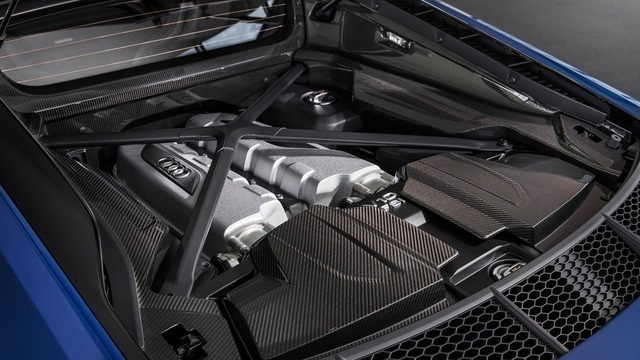
Every Audi V10 Car Ranked!
Joe Kucinski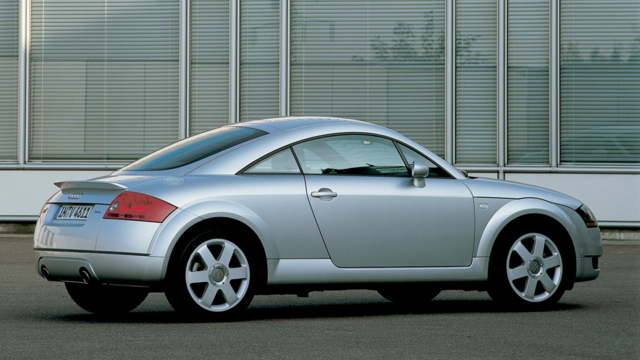
9 Audi Designs That Aged Like Fine Wine
Verdad Gallardo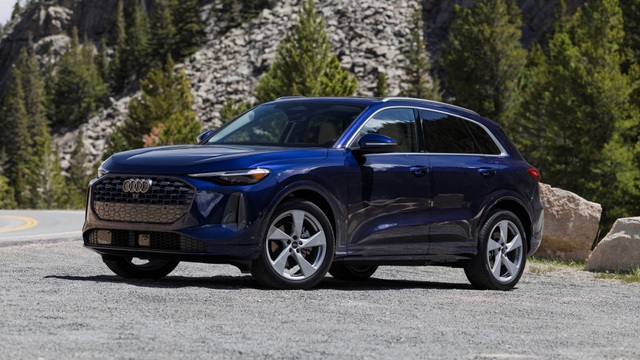
2026 Audi Q5 Buyer's Guide (Every Model Explained)
Brett Foote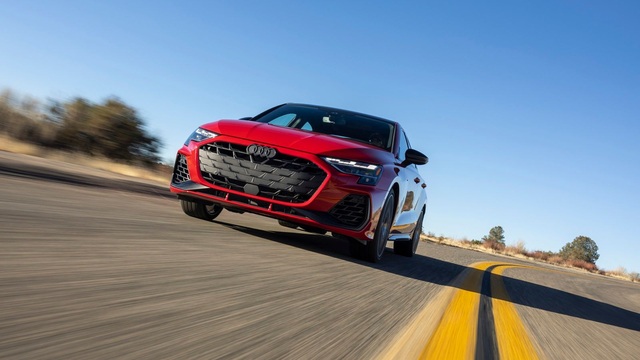
Ranking Every Current Audi 'S' Model From Worst to First!
Joe Kucinski
10 Best Audis That are FINALLY LEGAL to Import to the U.S.!
Joe Kucinski
AudiWorld Super User
Joined: Aug 2000
Posts: 5,018
Likes: 0
There's no such thing as "triggering too fast"
I suspect the weight of the S4 has a lot to do with how fast a wheel stops turning under braking conditions in the snow.
Remember ABS prevents <b>wheel lock</b>, nothing more. It does <b>not</b> stop you quicker, especially in deep snow where wheel lock will create a "snow dam" in front of each wheel to slow you down. It was never intended nor designed to stop you quicker.
As soon as an ABS system detects wheel lock, it will begin modulating the brakes to prevent it - thats the whole point. You can't steer if the wheel's not turning, and ABS allows you to mash the brake pedal to the floor <b>and</b> steer around road obstacles.
People who believe ABS will always stop you faster somehow are not correctly informed as to what ABS will and will not do for you.
Remember ABS prevents <b>wheel lock</b>, nothing more. It does <b>not</b> stop you quicker, especially in deep snow where wheel lock will create a "snow dam" in front of each wheel to slow you down. It was never intended nor designed to stop you quicker.
As soon as an ABS system detects wheel lock, it will begin modulating the brakes to prevent it - thats the whole point. You can't steer if the wheel's not turning, and ABS allows you to mash the brake pedal to the floor <b>and</b> steer around road obstacles.
People who believe ABS will always stop you faster somehow are not correctly informed as to what ABS will and will not do for you.

Junior Member
Joined: Mar 2000
Posts: 1,620
Likes: 0
He really meant that it's response is too aggressive
I konw what he's saying, and you're right, if there is no wheel lock, it won't trigger.
But he is also right, once it detects wheel lock, it immediately overestimates the loss of traction. I stress both "immediate" and "overestimates":
immediate: It doesn't even wait a single sensor cycle to give the driver a chance to fix the problem himself
overestimates: it resorts to a pulse <i>maximum</i> which itself is generally less than than enough to exceed the traction limit. In other words, when it pumps the brakes, it doesn't even pump them enough to lock them up again. This means means
a) there is no point to pumping them at all, just keeping them at that pressure would be better than pumping them to lesser pressures, and
b) it is *never* going to figure out if there suddeenly happens to be more traction (like the snow patch ends) because wheel lock is not part of what's causing it to keep pumping anyway (since there isn't any). The only thing it will do based on future wheel lock is pump even lighter.
But I still don't get why it's bothering to pump at all. It's like their strategy is "back off the brakes so they don't lock at all - but then pump them there anyway in case we made a mistake."
This is, in my sarcastic opinion, one step away from "shut off the brakes if a wheel locks, that way at least you can steer."
But he is also right, once it detects wheel lock, it immediately overestimates the loss of traction. I stress both "immediate" and "overestimates":
immediate: It doesn't even wait a single sensor cycle to give the driver a chance to fix the problem himself
overestimates: it resorts to a pulse <i>maximum</i> which itself is generally less than than enough to exceed the traction limit. In other words, when it pumps the brakes, it doesn't even pump them enough to lock them up again. This means means
a) there is no point to pumping them at all, just keeping them at that pressure would be better than pumping them to lesser pressures, and
b) it is *never* going to figure out if there suddeenly happens to be more traction (like the snow patch ends) because wheel lock is not part of what's causing it to keep pumping anyway (since there isn't any). The only thing it will do based on future wheel lock is pump even lighter.
But I still don't get why it's bothering to pump at all. It's like their strategy is "back off the brakes so they don't lock at all - but then pump them there anyway in case we made a mistake."
This is, in my sarcastic opinion, one step away from "shut off the brakes if a wheel locks, that way at least you can steer."